 How-to
Shop Floor Communication in Waste Fleets: A How-To Guide
Table of Contents
- Why Shop Floor Communication Breaks Down in Waste Operations
- Implement Daily Maintenance Huddles to Align Your Team
- Standardize How Drivers Report Vehicle Defects with Inspection Reports
- Create a Fleet Maintenance Work Order Process That Sticks
- Use a Maintenance Shift Handoff Checklist to Prevent Missed Repairs
- Measure Communication Effectiveness and Track Improvements
- Common Mistakes That Undermine Shop Floor Communication
- Frequently Asked Questions
Last Updated: October 18, 2026
Why Shop Floor Communication Breaks Down in Waste Operations
Most waste fleet managers inherit a broken system where shop floor communication waste fleets suffer from poor coordination.
A driver feels a transmission vibration but doesn't report it because he's behind schedule.
At Waste Fleet & Operations, we've watched this pattern repeat across dozens of waste haulers, small, large, and municipal.
The solution is straightforward: build repeatable routines that connect every role, drivers, dispatchers, mechanics, and yard staff.
Implement Daily Maintenance Huddles to Align Your Team
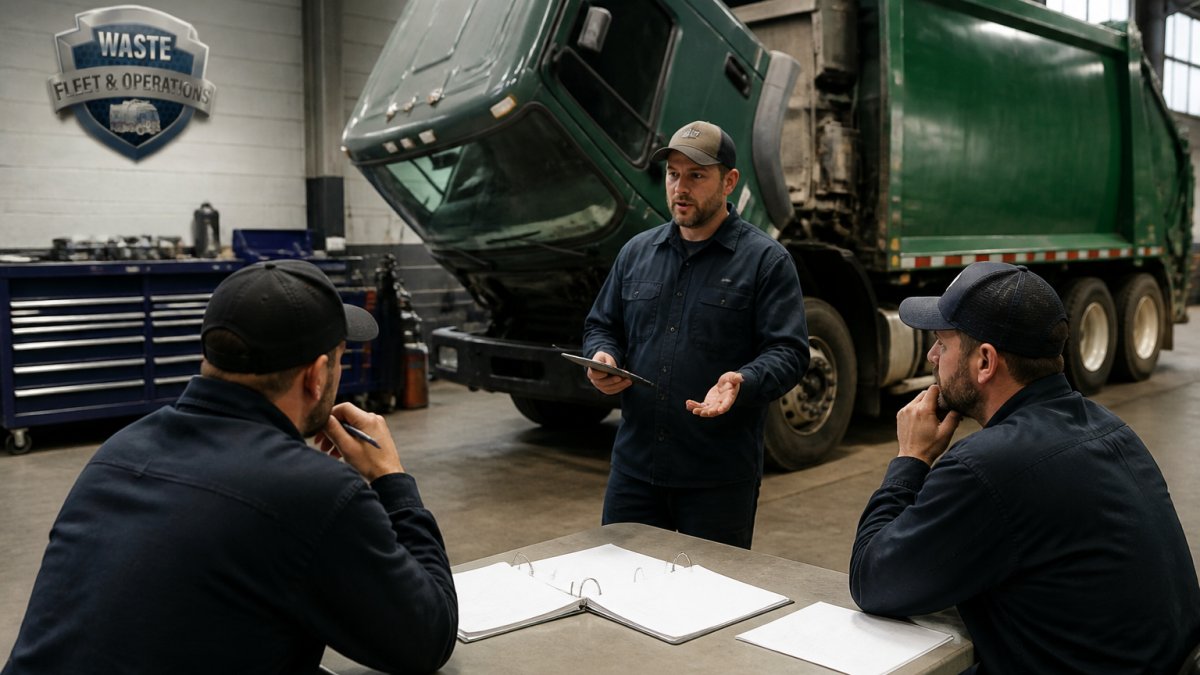
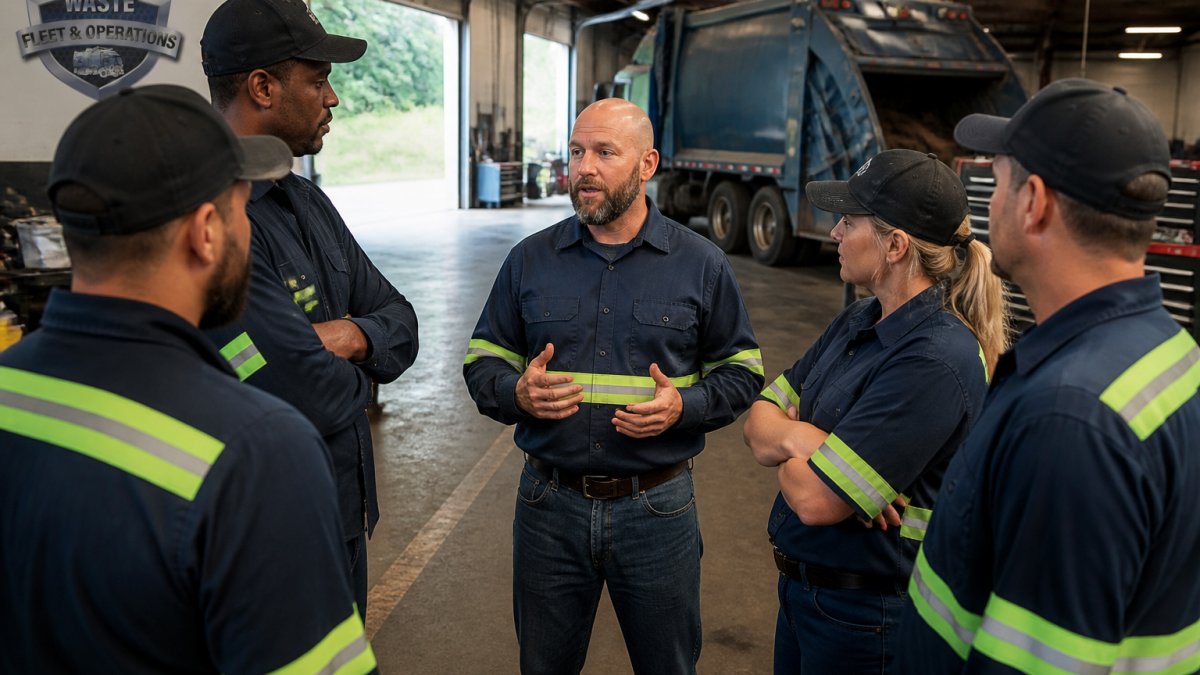
A 15-minute morning huddle transforms how your team coordinates. It's the single most effective tool for fixing shop floor communication in waste fleets because everyone is in the same room, talking about the same vehicles.
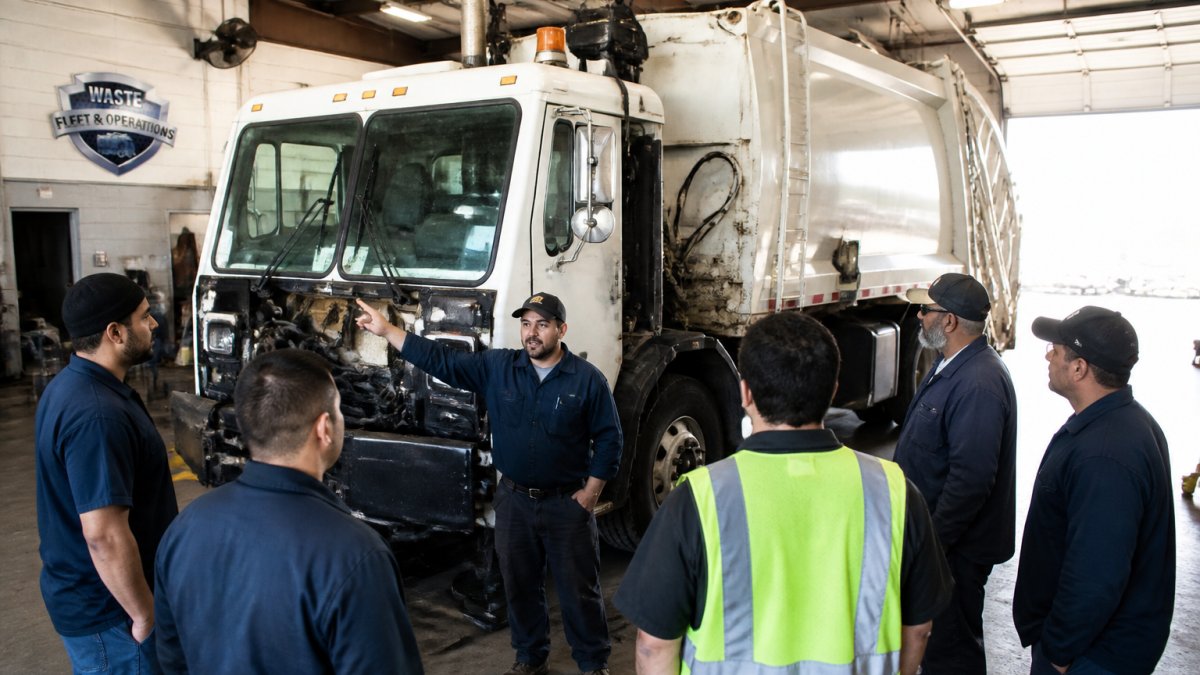
A huddle gives every person five minutes to report what they saw, what broke, and what's next. Drivers share overnight issues, mechanics list what's fixed and pending, and dispatchers confirm which trucks are ready.
What to Cover in a 15-Minute Huddle
Keep the agenda tight. Rambling huddles become a waste of time.
Vehicle status updates:
- Which trucks ran without issues, had breakdowns, or were pulled from service
- Which trucks are in the shop and when they'll be ready
Driver reports:
- Defects noticed on yesterday's routes
- Safety concerns or near-misses
- Requests for specific vehicle assignments based on known issues
Maintenance priorities:
- Work orders completed, in progress, or critical before the next shift
Dispatcher coordination:
- Route assignments and backup vehicles needed due to downtime
- Customer service issues from yesterday that impact today's plan
Safety or compliance notes:
- Anything affecting driver or pedestrian safety
- Regulatory reminders or inspection schedules
Don't turn this into a performance review or blame session. The huddle is for information flow, not discipline; address mistakes separately.
Who Attends and When to Schedule
The huddle needs the right people. Too many and it becomes a meeting. Too few and you miss critical information.
Must attend:
- Shop foreman or maintenance lead
- One or two mechanics representing the shift
- One or two drivers (rotate through your roster so everyone participates over time)
Should attend if available:
- Fleet manager (2-3 times per week)
- Safety manager (weekly)
Schedule it before the first route leaves. If your first pickup is at 6 a.m., run the huddle at 5:15 a.m.; if it's 7 a.m., run it at 6:15 a.m.
Keep it to 15 minutes, set a timer if needed. A 30-minute huddle becomes a chore people resent.
Standardize How Drivers Report Vehicle Defects with Inspection Reports
Drivers spend more time with the trucks than anyone else, but most don't know what or how to report, they either over-report minor issues or under-report serious ones.
A standardized inspection report fixes this by telling drivers exactly what to check and how to report it.
What Drivers Need to Know Before Starting Their Route
Every driver should complete a five-minute pre-route inspection that catches problems before they become breakdowns.
Brake system:
- Press the pedal; it should feel firm, not spongy.
- Check brake fluid if you know how.
- Listen for unusual sounds when braking.
Steering:
- Turn the wheel fully left and right. It should move smoothly without grinding or clicking.
- The wheel shouldn't be loose or require excessive force.
Tires:
- Check each tire for cuts, bulges, or uneven wear.
- Kick the tire; it should feel firm, not soft or flat.
Lights:
- Walk around the truck; check headlights, taillights, and brake lights.
- Check that dash warning lights are off (unless the truck has a known issue).
Fluid leaks:
- Look under the truck before you drive. Any puddles or drips should be reported.
Cab and controls:
- Check the horn, wipers, and seatbelt.
- Make sure all mirrors are adjusted and clean.
This isn't a full mechanical inspection, it's a five-minute safety check that catches most problems before they strand a driver on the road.
Creating a Simple Defect Reporting Workflow
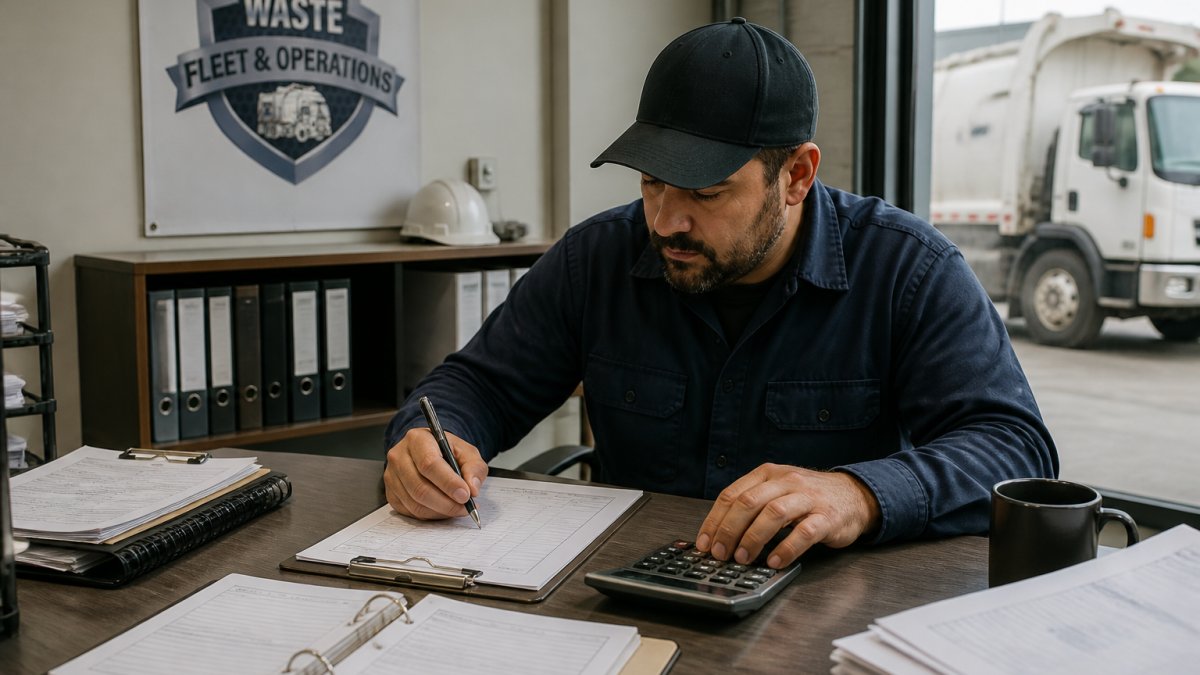
Give every driver a simple form that takes 30 seconds to fill out.
The form should include:
- Truck number, date and time, driver name
- What the driver noticed (brakes, steering, tires, lights, leak, noise, other)
- Where on the vehicle (front left, rear right, cab, engine bay)
Make it physical or digital, but keep it simple. A laminated card, mobile form, or notebook all work, consistency matters most.
Create a drop box or digital submission point. Drivers should know exactly where to turn in reports, a yard box or a phone app.
The mechanic or shop foreman reviews reports at the end of each shift. They prioritize repairs based on severity and create work orders for the next day.
Create a Fleet Maintenance Work Order Process That Sticks
A work order bridges what drivers report and what mechanics fix. Without a standard process, repairs get lost, duplicated, or done wrong.
Essential Information Every Work Order Must Include
A work order should be one page with everything a mechanic needs to do the job right.
Vehicle information:
- Truck number
- Make and model
- Current mileage
Problem description:
- What the driver or inspector reported
- When it started and how often it happens (every time, intermittent, under load)
Priority level:
- Urgent: vehicle cannot run safely
- High: vehicle can run but needs repair within 24 hours
- Standard: repair can wait until next scheduled maintenance window
Assigned mechanic:
- Who is responsible for this work
- When they should start
Expected completion date:
- When the truck needs to be back in service
Signature line:
Book My Complimentary Discovery Call →
- Mechanic signs when the work is done; the shop foreman reviews and approves
Cost estimate (if applicable):
- For major repairs, estimate the cost before starting work
The work order is not a suggestion. It's a commitment. Once it's assigned, it has an owner and a deadline.
Tracking and Follow-Up
A work order means nothing if nobody tracks it. You need a simple system showing which repairs are done, in progress, or stuck.
Use a physical board or spreadsheet, not memory. Write down every open work order, update it daily, and keep it visible.
Close the loop. Mark completed repairs on the board, confirm with the driver that the problem is fixed, and reopen the work order if it isn't.
Use a Maintenance Shift Handoff Checklist to Prevent Missed Repairs
Most waste operations run two shifts or more. When the day shift ends, information gets lost: the night shift mechanic has no idea what was done, what's pending, or what needs priority.
A shift handoff checklist stops this, a five-minute conversation where one shift tells the next exactly what's happening.
What Goes on the Handoff Checklist
The checklist should be posted in the shop where both shifts can see it.
Vehicles in the shop:
- Truck number and what's being repaired
- How far along the repair is (just started, halfway, almost done)
- Any parts on order and expected completion time
Trucks ready to go:
- Which trucks were fixed and are back in service
- Notes about the repair (new part, temporary fix, needs follow-up)
Trucks waiting for parts:
- Which trucks can't be fixed until a part arrives
- When the part is expected and what to do when it arrives
Safety or compliance issues:
- Trucks that should not run until a specific repair is done
- Upcoming regulatory inspections, recalls, or bulletins
Tools or equipment status:
- Tools needing repair or replacement
- Equipment shared between shifts
Urgent notes:
- Anything the incoming shift needs to know right away
- Customer complaints, special requests, or vendor issues
Running an Effective Handoff Meeting
The handoff takes five minutes. Make it routine.
Schedule it at the shift change. If the day shift ends at 3 p.m., run the handoff at 2:55 p.m.
Write it down. Use the same checklist format every time, keep it posted, and update it as the shift progresses.
Sign off. Both shift leads initial the checklist, so if something goes wrong you know who was supposed to communicate it.
This simple routine prevents repairs from falling through the cracks when shifts change.
Measure Communication Effectiveness and Track Improvements
You can't improve what you don't measure. Most waste operations have no idea whether their shop floor communication is working or getting worse.
Start tracking these metrics. They're simple to measure and they tell you if your communication system is effective.
Breakdowns per week:
- Count road breakdowns weekly and track the last 12 weeks as a baseline.
- After three months of huddles, work orders, and handoff checklists, measure again.
- A 25-50% reduction is realistic if communication improves.
Work orders completed on time:
- Track the percentage of repairs finishing by their expected date.
- Most operations start below 70%; after three months, aim for 85-90%.
Driver defect reports:
- Count weekly defect reports; more in the first month is good, drivers are engaging.
- After a month the number should stabilize. If it drops, reinforce the routine.
Repeat repairs:
- Track how often the same truck returns for the same problem within 30 days.
- A high rate means repairs aren't done right or the root cause isn't fixed.
- Work order standards and handoff checklists should drop this significantly.
Shop productivity:
- Measure work orders completed per mechanic per week.
- Clear communication and standardized processes should raise this because mechanics spend less time hunting for information or redoing work.
Review these metrics every month. Share them with the team. When metrics improve, celebrate. When they stall, dig into why and adjust your approach.
Common Mistakes That Undermine Shop Floor Communication
Most waste operations make the same mistakes. Knowing them helps you avoid them.
Skipping the huddle when you're busy:
- When breakdowns spike, managers often cancel the huddle to get trucks running, backwards.
- A huddle prevents breakdowns; cancel it and you'll have more next week.
- Run it every day, even when it feels like a luxury.
Making the huddle too long:
- A 30-minute huddle becomes a meeting nobody wants to attend.
- Stick to 15 minutes; if you can't cover everything, the huddle isn't the problem, your operation is too disorganized.
Not following up on driver reports:
- A driver submits a defect report and nothing happens, so they stop reporting.
- Every report needs a response: either a work order or an explanation why not.
Losing work orders:
- A work order disappears into a pile of papers.
- Use a visual tracking system, a board, spreadsheet, or log everyone can see.
- If nobody can find it, it won't get done.
Not training new mechanics on the system:
- A new mechanic starts and nobody explains work orders or the handoff checklist.
- They improvise and the system breaks down.
- Spend 30 minutes with every new hire walking them through the process.
Treating communication as a one-time fix:
- You implement huddles, then stop after two months because "it's working now."
- Communication breaks down again immediately.
- These routines only work if consistent, treat them like preventive maintenance, non-negotiable.
Shop floor communication in waste fleets doesn't require expensive software or a complete operational redesign. It requires discipline, consistency, and clarity about who talks to whom and when.
Ready to stop losing money to preventive breakdowns and communication gaps? OSHA guidelines on workplace safety and hazard communication require clear processes for reporting safety issues, these routines meet that standard while improving your bottom line.
Frequently Asked Questions
How can shop floor communication in waste fleets reduce daily breakdowns?
Clear communication between drivers and maintenance teams catches vehicle issues before they become roadside failures. When drivers submit structured vehicle inspection reports and mechanics respond through a standardized work order process, preventive maintenance happens on schedule. Daily huddles keep everyone aligned on fleet status and priorities. This coordination prevents the miscommunication that leads to missed repairs and unexpected downtime. Teams report 25-50% reductions in daily breakdowns after implementing these routines.
What should a daily maintenance huddle cover in a waste fleet?
A 15-minute huddle should address vehicle status (which trucks are ready, which are in maintenance), priority repairs for the day, any driver defect reports from the previous day, parts availability, and safety concerns. Include dispatchers, mechanics, and maintenance supervisors. This ensures drivers know which vehicles to use, mechanics understand priorities, and everyone sees the full picture of fleet readiness. Consistent huddles reduce confusion and missed handoffs between shifts.
How should drivers submit vehicle defects to the maintenance team?
Use a standardized driver vehicle inspection report format, either digital or paper, that captures the vehicle ID, specific defect description, when the problem occurs, and severity level. Drivers should complete this before or immediately after their route. Mechanics need clear, consistent information to diagnose and fix issues quickly. A simple form prevents vague reports like 'truck sounds weird' and ensures nothing gets lost in translation between shop floor and drivers.
What metrics should I track to measure if shop floor communication is improving?
Track daily breakdown counts, road call frequency, average repair completion time, percentage of preventive maintenance completed on schedule, and the number of defects caught before they become failures. Compare these metrics month-over-month to see the impact of your communication improvements. If huddles, inspection reports, and handoff checklists are working, you'll see breakdowns drop, repair turnaround improve, and vehicle availability increase. Most operations see measurable gains within 30-60 days.