 how-to
Waste Fleet Breakdown Prevention: 7 Proven Strategies
Table of Contents
- Why Waste Fleet Breakdowns Cost More Than You Think
- Build a Waste Truck Preventive Maintenance Program That Sticks
- Create a Fleet Vehicle Inspection Checklist for Daily Operations
- Establish a Waste Fleet Maintenance Schedule That Reduces Downtime
- Implement Fleet Breakdown Tracking and Root-Cause Analysis
- Train Your Team and Bridge the Shop-to-Management Gap
- Measure What Matters: Maintenance KPIs and ROI
- Prepare for Seasonal and Environmental Challenges
- Frequently Asked Questions
Last Updated: October 12, 2026
Why Waste Fleet Breakdowns Cost More Than You Think
Breakdowns ripple through your operation: missed routes, overtime labor, angry customers, and emergency repairs costing 3-5 times more than planned maintenance.
At Waste Fleet & Operations, we've analyzed breakdown data across hundreds of waste fleets.
Beyond parts and labor, add the tow truck, route redistribution, idle driver, customer service calls, and lost revenue from missed pickups.
Waste fleet breakdown prevention through structured inspections, scheduled service, and defect tracking stops problems before they stop your trucks.
Build a Waste Truck Preventive Maintenance Program That Sticks
A preventive maintenance program only works if your team follows it. Most fail because they're built like templates, not tailored to how a waste truck actually wears out.
Start With the Failure Modes That Are Unique to Waste Trucks
Before writing a single PM interval, understand what actually breaks on a collection truck. The duty cycle is brutal: hundreds of stop-start cycles per shift, constant hydraulic actuation, and a body loaded, compacted, and dumped dozens of times a day. The systems that fail first aren't the ones a generic checklist emphasizes.
- Packer and compactor hydraulics. Every pack cycle strokes the cylinder, heats the oil, and stresses seals, hoses, and fittings. Hot, contaminated hydraulic oil is the most common precursor to a mid-route packer failure. Sample the oil on a fixed interval and watch for rising temperature and particulate counts.
- Lift arms, cart tippers, and grabber mechanisms. These see thousands of cycles and take impact loads from overloaded or misaligned containers. Cracks at pivot points and worn bushings are progressive, they telegraph themselves long before a weld fails.
- Stop-start drivetrain and brake wear. A collection truck logs a fraction of a line-haul truck's highway miles but cycles the brakes, starter, and transmission far more. Schedule brake and starter wear by engine hours and stop counts, not odometer miles.
Build the Program Around Those Failure Modes
Audit what breaks most often. Pull 12 months of maintenance records and sort failures by system, not just by truck.
Assign clear ownership. A PM program needs a champion who owns the schedule, tracks compliance, and reports results to management. Without accountability, it drifts.
Build the schedule around your operational reality. Heavy residential routes with high pack-cycle counts need shorter hydraulic and brake intervals; harsh conditions need seasonal checkups.
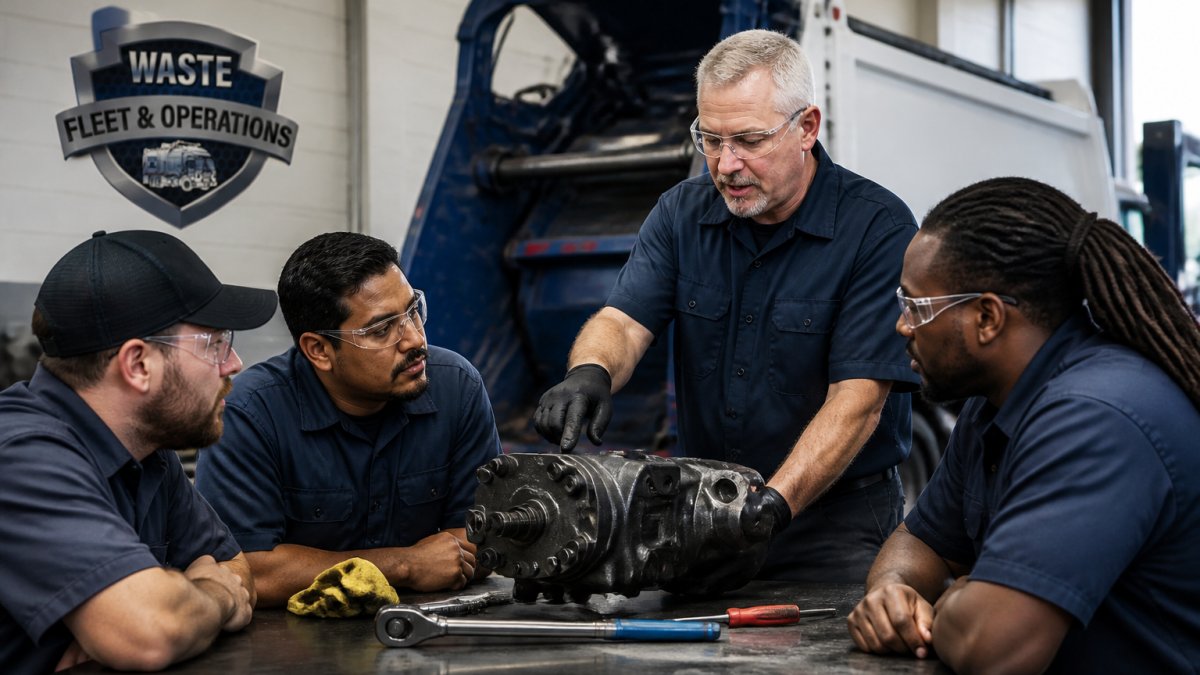
Train technicians on the "why" behind each task.
Document everything in a maintenance management system: when work was done, who did it, what was found. Log pack-cycle counts and hydraulic oil temperatures alongside odometer and engine-hour readings, that data moves you from calendar-based to condition-based service.
Create a Fleet Vehicle Inspection Checklist for Daily Operations
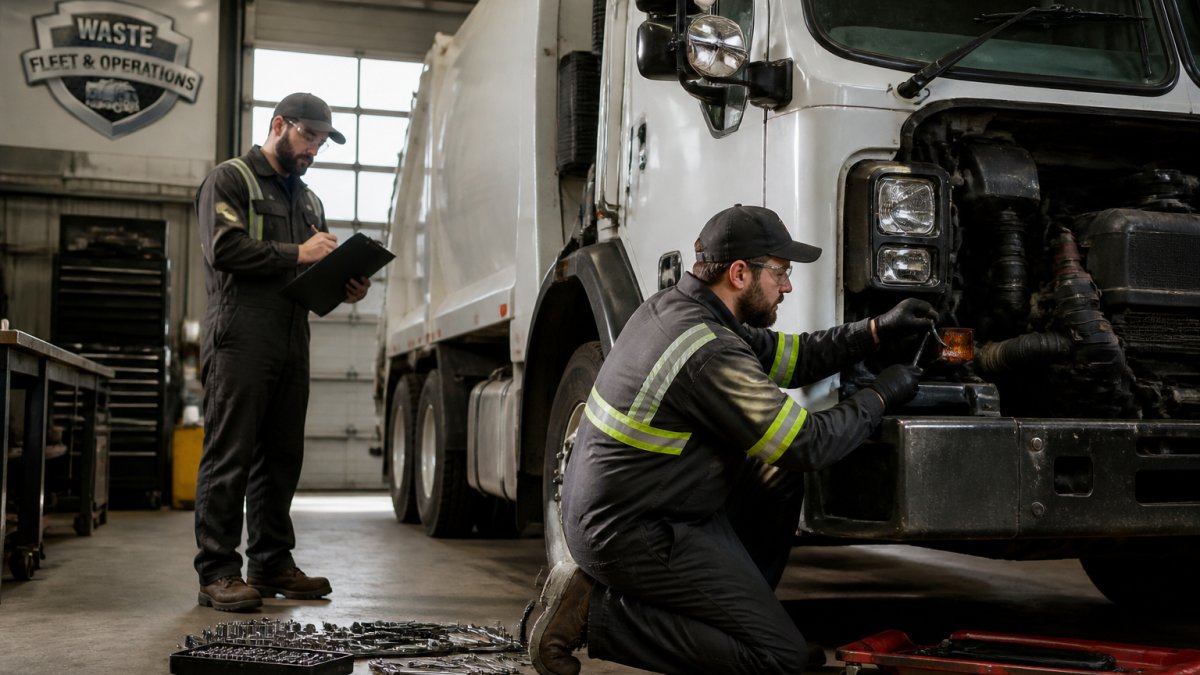
An inspection checklist is your first line of defense, but only if drivers and technicians actually use it and report what they find.
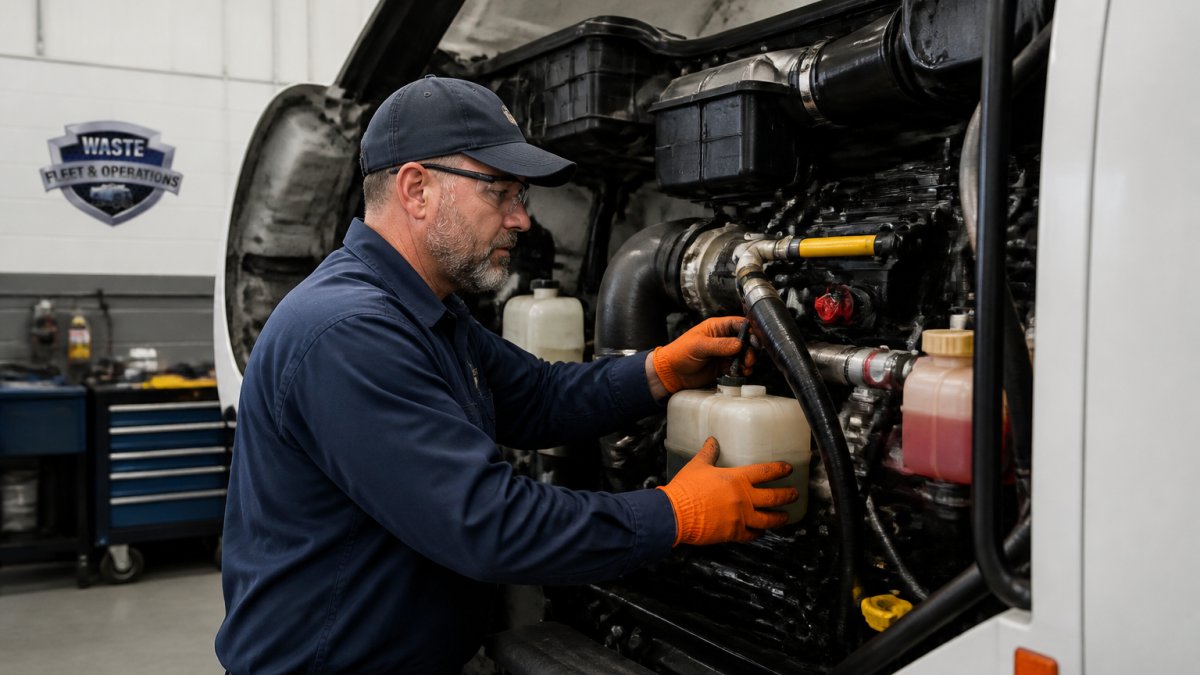
Pre-Trip Inspection Essentials
A pre-trip inspection takes 10-15 minutes and prevents most roadside failures. Make it a daily routine, not an afterthought.
Your pre-trip checklist should cover:
- Tire pressure and tread depth (underinflated tires fail fast on heavy routes)
- Fluid levels: engine oil, coolant, transmission fluid, hydraulic fluid
- Brake system: pedal feel, warning lights, air pressure
Keep the checklist simple: pictures, not paragraphs. Drivers need to complete it in 10 minutes, not study a manual.
Require drivers to sign off. That creates accountability and documentation if a skipped checklist leads to a breakdown.
Post-Trip Inspection and Defect Reporting
A post-trip inspection catches problems the driver experienced during the day, your window into what's happening in the field.
Create a simple defect reporting form. Drivers should note:
- Any unusual noises, vibrations, or smells
- Fluid leaks observed during the day
- Warning lights that appeared
Make reporting easy with a mobile app or a paper form kept in the truck. The easier it is, the more defects you'll catch.
Review defect reports daily and triage by severity: a brake warning light gets looked at today, a minor vibration waits for scheduled maintenance.
Establish a Waste Fleet Maintenance Schedule That Reduces Downtime
A maintenance schedule is your roadmap: what to do, when, and why.
Build your schedule around manufacturer recommendations, then adjust for actual operating conditions. A waste truck in a harsh climate with heavy loads needs more frequent service than a lightly loaded truck in mild conditions.
Create tiers of maintenance:
Daily checks (driver responsibility): fluid levels, tire pressure, lights, basic safety items
Weekly maintenance (shop responsibility): detailed fluid inspection, hose check, brake system inspection, hydraulic system walk-around
Monthly maintenance: transmission service, differential service, coolant system flush, brake system deep dive
Quarterly maintenance: engine oil and filter change, comprehensive system inspection, parts replacement based on condition
Annual maintenance: major overhauls, system rebuilds, deep cleaning and inspection
Implement Fleet Breakdown Tracking and Root-Cause Analysis
Every breakdown is data. Tracking is only half the job, the other half is knowing what to do when a loaded truck fails on a route, then closing the loop so it doesn't happen again.
Book My Complimentary Discovery Call →
Capture the Right Data at the Point of Failure
Create a breakdown log that captures more than the repair ticket:
- Date, time, and location of failure (on-route vs. in-yard matters)
- Truck number, system that failed, and fault codes pulled from the ECM
- What the driver was doing when it happened (packing, lifting, driving, dumping)
That load-status field is easy to skip and easy to regret. A truck that fails empty is a recovery problem. A truck that fails full is a recovery problem plus a load-transfer problem plus a customer-service problem.
Run Root-Cause Analysis That Actually Prevents Repeat Failures
Conduct root-cause analysis on every major breakdown.
A repeat-repair rate is the clearest signal that your root-cause work is failing.
Look for patterns across the fleet: do certain models fail more often, do specific systems fail in certain seasons, does one technician's work hold up better?
Share breakdown data with your team. When technicians see a skipped hydraulic filter change led to a pump replacement, the PM program feels real.
Have a Breakdown-Response and Route-Continuity Plan Ready Before You Need It
Most fleets improvise this part, yet it determines whether a mid-route failure costs an hour or a day. Write the plan down and rehearse it.
- Make the scene safe and stabilize the truck. Get the truck out of the travel lane if it can move, set out triangles or cones, and confirm the driver is safe. A loaded collection truck stopped on a residential street is a hazard and a public-relations problem at the same time.
- Triage by load status. If the truck is empty or nearly empty, recovery is straightforward: dispatch a mechanic or a tow. If it's full, decide immediately whether to transfer the load to a spare truck on-site or tow the loaded truck to the disposal site or yard. Load transfer needs a plan, the right equipment, and a place to do it safely.
- Dispatch the spare and re-sequence the route. Pull the nearest available truck and reassign the remaining stops. Decide in advance which routes get covered first when you're short a truck, missed pickups in dense residential areas compound faster than missed pickups on a light commercial route.
- Communicate with customers before they call you. A short proactive notice to affected customers beats a wave of complaint calls. Have a template ready so dispatch isn't writing it from scratch under pressure.
- Recover the truck and preserve the evidence. Before the truck is repaired, pull fault codes and photograph the failed component. Once it's back in service, that evidence is gone, and so is your root-cause analysis.
- Debrief within 24 hours. Capture what happened, how long recovery took, and what would have made it faster. Feed that back into the breakdown log.
Train Your Team and Bridge the Shop-to-Management Gap
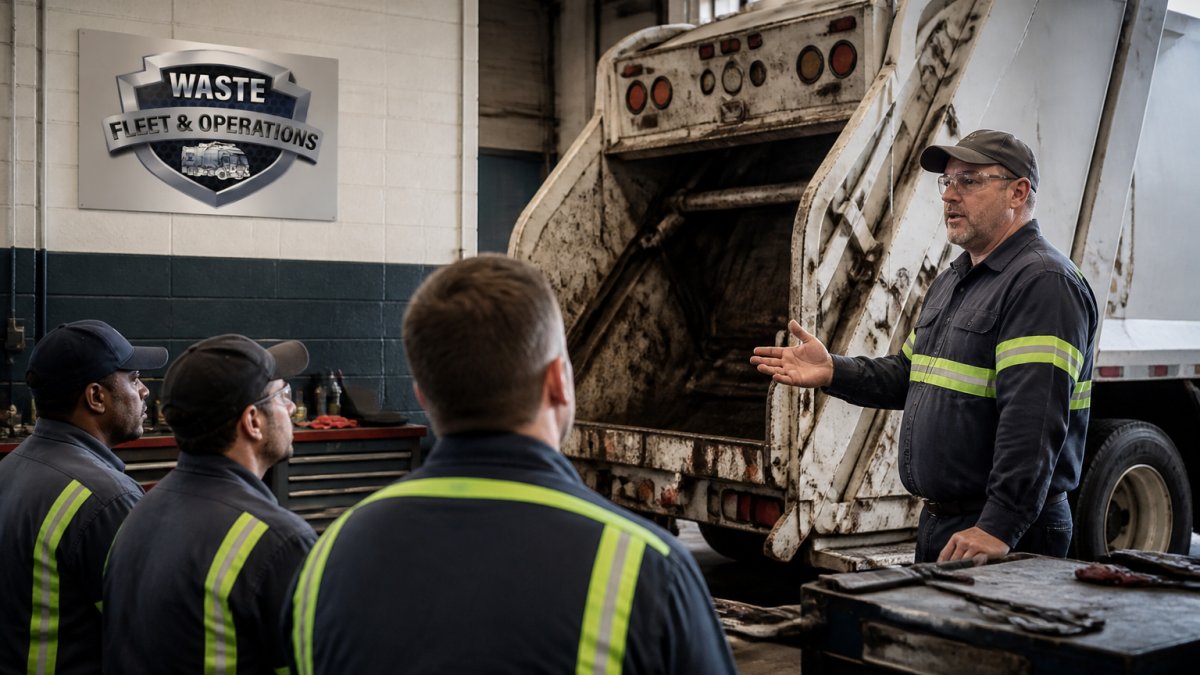
The biggest communication gap in waste fleets is between the shop floor and management. Technicians see problems coming. Managers don't hear about them until trucks are down.
Invest in hands-on training.
Training should cover:
- How to recognize early failure signs in waste truck systems
- How to document findings clearly so management understands
- How to prioritize repairs by risk, not just by urgency
Create a formal channel for technicians to escalate concerns.
Hold monthly meetings between shop leadership and operations management to review breakdown data, program performance, and seasonal challenges. That alignment keeps everyone on the same goals.
Measure What Matters: Maintenance KPIs and ROI
You can't improve what you don't measure. Track these KPIs:
Breakdown frequency: How many unplanned failures per truck per month?
Mean time between failures (MTBF): How long does a truck run before it fails?
Maintenance cost per mile: Divide total maintenance spending by total miles driven.
Schedule adherence: What percentage of scheduled maintenance actually happens on time?
Downtime per breakdown: How long is a truck out of service when it fails?
Report these metrics monthly and share them with your team.
Prepare for Seasonal and Environmental Challenges
Waste fleets operate in all conditions. Winter brings cold starts and salt corrosion.
Build seasonal maintenance into your schedule. Before winter, inspect batteries, coolant concentration, and brakes.
Document what breaks each season.
Train drivers on seasonal operation: cold-weather starts, cooling hydraulic systems in summer, handling muddy roads without overloading.
If your fleet is losing money to preventable breakdowns, we can help.
| Maintenance Level | Frequency | Primary Focus | Typical Cost Impact |
|---|---|---|---|
| Daily (Driver) | Every shift | Fluid levels, tire pressure, lights, safety checks | |
| Weekly (Shop) | Once per week | Detailed inspection, hose condition, brake system | Catches emerging issues early |
| Monthly (Shop) | Once per month | Fluid changes, comprehensive system review | Extends component life |
| Quarterly (Shop) | Every 90 days | Major service items, parts replacement | |
| Annual (Shop) | Once per year | Complete overhaul, system rebuilds | Maintains fleet reliability |
Frequently Asked Questions
What are the most effective ways to prevent waste truck breakdowns?
The most effective approach combines three elements: a structured preventive maintenance schedule tied to hours or miles, daily pre-trip and post-trip inspections by drivers, and systematic tracking of all repairs and failures to identify patterns. Start with a maintenance schedule based on manufacturer recommendations, then add driver inspections using a standardized checklist. Track every breakdown in a work order system to spot recurring issues before they cause roadside failures.
How often should waste trucks receive preventive maintenance?
Waste trucks typically require preventive maintenance every 250-500 operating hours or every 6-12 months, whichever comes first, more frequent than standard commercial vehicles because waste collection involves constant stop-and-go driving, high engine load, and exposure to harsh conditions. Check your truck manufacturer's specifications for exact intervals. In addition to scheduled maintenance, implement daily pre-trip inspections and track all work orders to catch emerging issues before the next scheduled service. Environmental factors like extreme temperatures or dusty routes may require more frequent intervals.
What should a daily waste truck inspection include?
A daily pre-trip inspection should take 10-15 minutes and cover: tire pressure and condition, fluid levels (oil, coolant, brake fluid), brake operation and warning lights, horn and safety lights, windshield wipers, and steering responsiveness. Post-trip, drivers should note any unusual sounds, vibrations, leaks, or warning lights in a defect report. Use a printed or digital checklist so drivers follow the same routine every day. This catches small issues, low tire pressure, slow leaks, worn brake pads, before they become roadside failures that disrupt your route and cost thousands in downtime.
How can fleet managers identify recurring breakdowns and prevent them?
Track every breakdown and repair using a work order system that captures the vehicle, date, failure type, and root cause. Review the data monthly to spot patterns: if three trucks fail the same component within six months, that component is a risk. Once you identify a recurring failure, investigate the root cause, poor maintenance history, operator abuse, contamination, or a design flaw, and address it directly. For example, if multiple trucks fail hydraulic systems, the cause might be contaminated fluid or inadequate flushing intervals. Fixing the root cause prevents the same failure across your fleet.