 how-to
Training Shop Technicians for Waste Fleets
Table of Contents
- Why Waste Fleet Training Is Different From General Diesel Training
- What You'll Need Before You Start
- Step 1: Run a Fleet Technician Skills Assessment
- Step 2: Build Your Technician Training Plan Template
- Step 3: Deliver Preventive Maintenance Training for Fleet Technicians
- Step 4: Use a Diesel Mechanic Training Checklist Every Week
- Common Mistakes That Kill Waste Fleet Training Programs
- Conclusion
- Frequently Asked Questions
Last Updated: October 5, 2026
Why Waste Fleet Training Is Different From General Diesel Training
A waste truck never gets a day off. It runs 300-plus stops, packs refuse at high pressure, and stops and starts thousands of times a week. That duty cycle breaks parts a highway diesel never touches.
At Waste Fleet & Operations, we have spent years inside waste shops. The gap we see is always the same. A tech who can rebuild an over-the-road engine still struggles with a packer blade, a hydraulic ram, or a body control module.
Waste fleet maintenance is the work of keeping collection vehicles safe and available on a daily route. It covers the chassis, the engine, and the refuse body as one system.
The differences that matter most:
- Stop-and-go duty cycle wears brakes, transmissions, and starters far faster
- Hydraulics run the packer, arms, and lifters, and they fail under pressure
- Corrosion from wet waste eats frames, hoppers, and electrical grounds
- Route pressure means a down truck costs the whole day, not one load
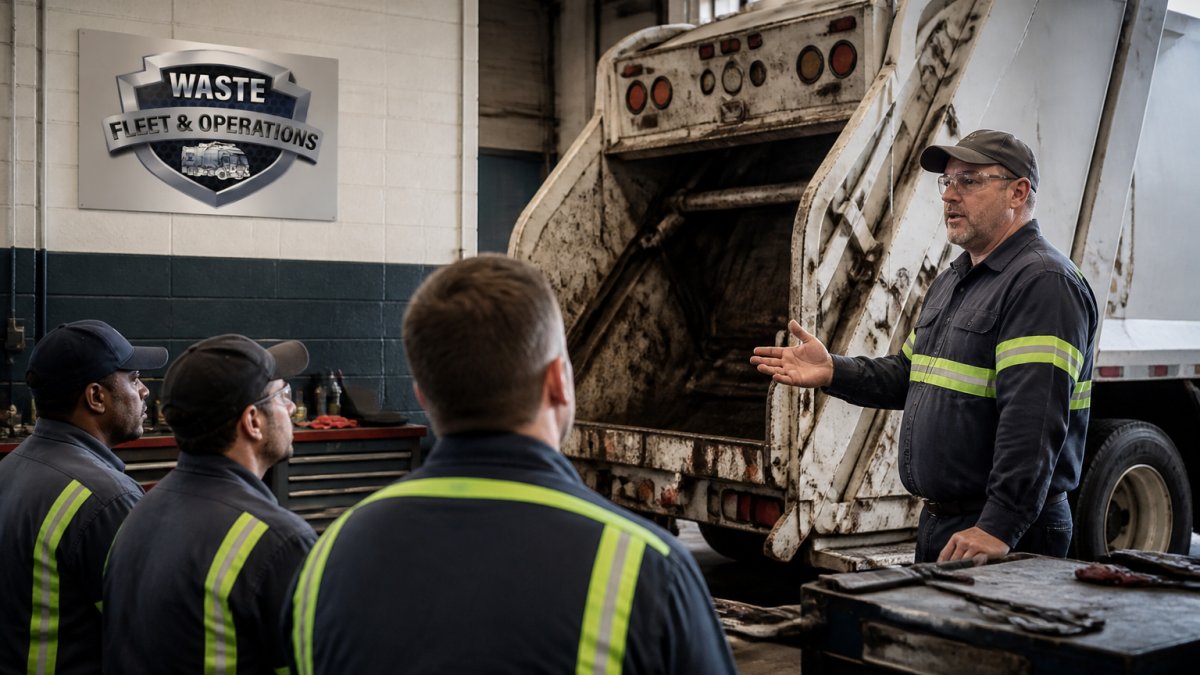
General diesel training teaches the engine. Waste fleet training teaches the whole truck.
What You'll Need Before You Start
Start with three things: a baseline skills record, your repair history, and time on the shop floor. Skip any one and the training drifts.
Gather these before the first session:
- Repair and road call logs for the last 12 months
- A list of your truck makes, body types, and model years
- Current job descriptions for each technician
- Access to the trucks for hands-on work
- A shop lead or senior tech to help teach
- A simple way to track progress, even a spreadsheet
The Occupational Safety and Health Administration sets the safety rules that shape how you train around hydraulics, lifts, and confined spaces. Build those into day one, not later.
One more thing: pick a training owner. Programs without a named owner fade in about 90 days.
Step 1: Run a Fleet Technician Skills Assessment
A fleet technician skills assessment is a structured check of what each tech can actually do, not what their resume says. It scores real tasks against a standard so you know where to focus.
Do it in three parts:
- Written check on systems, fluids, and fault codes
- Hands-on check on a real truck: brakes, hydraulics, electrical
- Supervisor review of past work quality and speed
Score each tech from 1 to 5 on core skills. Track items like:
- Air brake adjustment and inspection
- Hydraulic hose and cylinder repair
- Electrical fault tracing
- Preventive maintenance inspections
- Packer and body diagnostics
The results tell you who needs what. A tech strong on engines but weak on hydraulics gets a different plan than the reverse.
Step 2: Build Your Technician Training Plan Template
A technician training plan template turns assessment results into a schedule. It names the skill, the trainer, the date, and the proof of completion.
Build yours with these columns:
| Skill | Current Level | Target Level | Trainer | Target Date |
|---|---|---|---|---|
| Air brake service | 3 | 5 | Shop lead | Q1 |
| Hydraulic diagnostics | 2 | 4 | Senior tech | Q1 |
| Electrical fault tracing | 2 | 4 | Senior tech | Q2 |
| PM inspections | 3 | 5 | Shop lead | Q2 |
| Packer repair | 1 | 4 | Senior tech | Q3 |
Keep it to one page per tech. Review it monthly. Update the levels as skills grow.
Group training works for shared topics like safety and PM steps. One-on-one coaching works for hands-on repair skills. Mix both.
What most guides miss is the follow-up. A plan with no review date is just a wish list. Put the review on the calendar before the training starts.
Step 3: Deliver Preventive Maintenance Training for Fleet Technicians
Preventive maintenance training for fleet technicians is where the money is. Catching a worn hose or a loose ground before it fails keeps the truck on route. But on a waste fleet, PM is not a generic diesel checklist with a few extra lines. It is a route-availability discipline built around the refuse body.
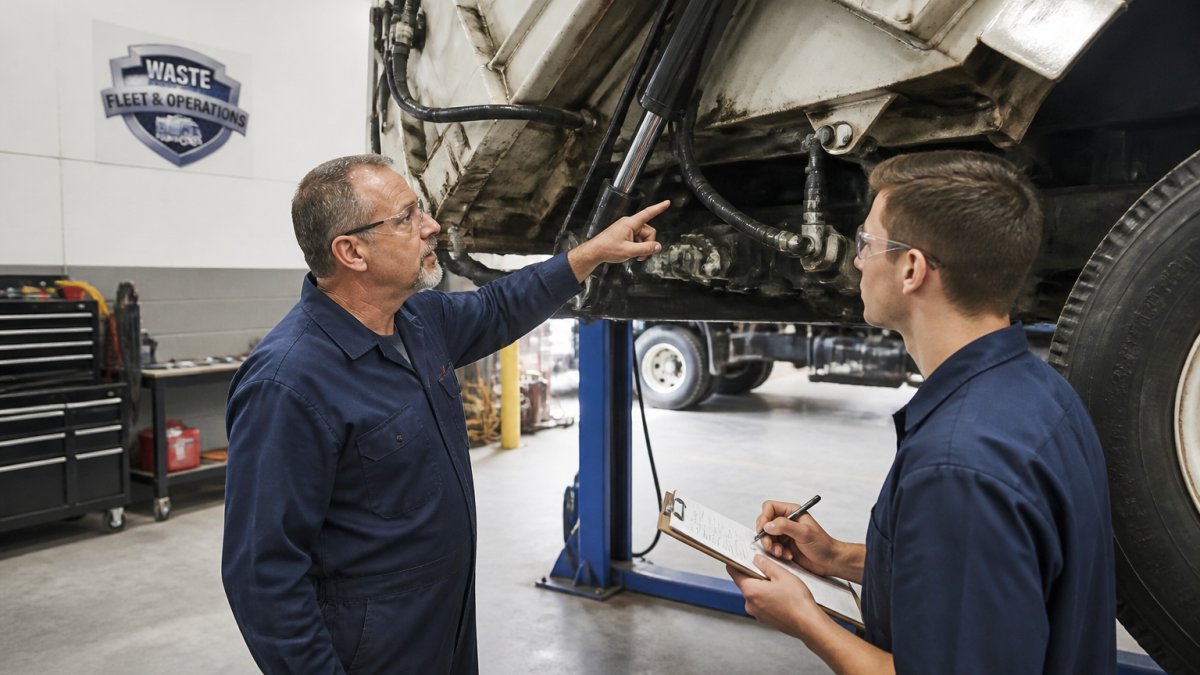
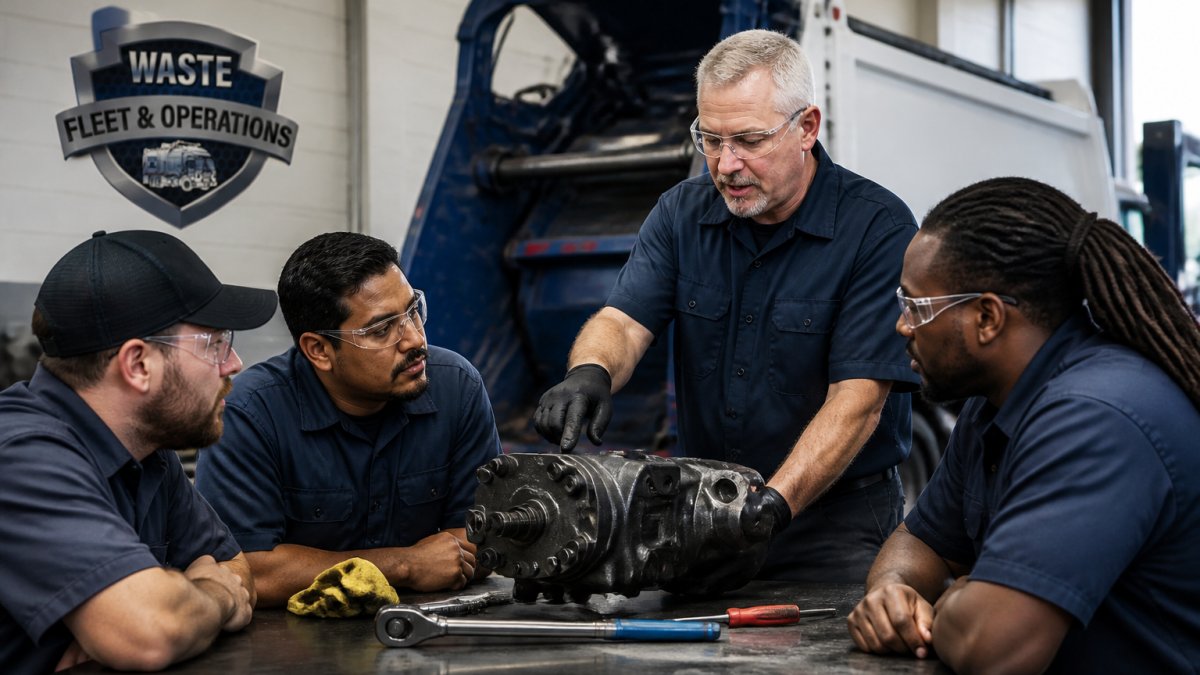
Deliver it on your trucks, not in a classroom. Techs learn a PM inspection by doing one, with a coach beside them.
Teach the chassis and the body as one system
Most general diesel PM training stops at the chassis. Waste fleet PM has to cover the refuse body with the same rigor, because that is where route-killing failures hide.
Cover these in every PM session:
Chassis and powertrain
- Fluid levels, leaks, and contamination (engine oil, coolant, transmission, differential)
- Air brake stroke, pad and drum wear, slack adjuster function, and air-loss test
- Steering play, king pins, and tire pressure and tread depth
- Starter and alternator draw, especially on stop-and-go routes
Refuse body and hydraulics
Book My Complimentary Discovery Call →
- Hydraulic reservoir level, fluid color, and evidence of overheating
- Pump drive, PTO engagement, and relief valve behavior
- Packer blade cycle time, panel seals, and cylinder drift under load
- Tipper, arm, and lifter function through a full cycle, not just a static check
- Body mounts, hopper floor wear, and weld cracks from repeated packing loads
Electrical and corrosion
- Ground straps and body grounds, which corrode fast in wet-waste service
- Body control module faults, sensor faults, and intermittent codes
- Corrosion at connectors, light bars, and rear-camera and safety systems
- Battery health and charging system output under load
Build the PM around route risk, not just the manual
A PM interval copied from a chassis manual will not match a waste duty cycle. Most practitioners find that stop-and-go collection routes justify shorter brake and hydraulic inspection intervals than over-the-road service, and that corrosion checks belong on every PM rather than on a seasonal schedule.
Set a standard PM time and hold to it, but define the standard by truck type. A rear-loader, a side-loader, and a front-loader each have different body systems and different failure points.
The Environmental Protection Agency rules on fluid and waste handling belong in this training too. A spill in the shop is a cost and a citation. Cover used oil and hydraulic fluid handling, parts-washer solvent, and how to contain a leak found during a PM before it reaches a floor drain.
The goal of PM training is not a faster inspection. It is a thorough one that finds problems before the route does. On a waste fleet, that means inspecting the packer, the arms, and the grounds with the same attention the chassis gets. Speed comes later, with repetition.
Step 4: Use a Diesel Mechanic Training Checklist Every Week
A diesel mechanic training checklist keeps skills sharp through repetition. Use it weekly so training becomes routine, not an event. This is the piece most waste-fleet training guides skip: they describe a curriculum but never show how a tech moves from "watched it once" to "can do it alone on a route-critical repair."
Tie every checklist to a competency level
A checklist without a target level is just a to-do list. Score each task on a simple four-level scale and record the level on the checklist:
- Observed, has watched a qualified tech perform the task
- Assisted, performed the task with hands-on help
- Supervised, performed the task alone with a tech checking the result
- Independent, performed the task alone, result verified by inspection or road test
A tech is not signed off on a task until they reach Independent. That single rule turns a weekly checklist into a progression record you can defend at review time.
Build one checklist per skill area
Here is a sample for hydraulics at the Independent level:
- Check fluid level and color against spec
- Inspect hoses for cracks, chafing, and heat damage
- Test each cylinder for drift and external leaks under load
- Check fittings, seals, and relief valve behavior
- Cycle the packer, tipper, or lifter through a full sequence
- Record findings, pressures, and photos
- Review with a senior tech and sign off
Rotate the checklist topic each week. One week hydraulics, next week air brakes, then electrical fault tracing, then PM inspection, then body and packer diagnostics. Over a quarter, every core waste-fleet skill gets touched multiple times.
Use the same checklist for assessment and for training
The weekly checklist and the skills assessment from Step 1 should use the same task list and the same four-level scale. That way the assessment is not a separate event, it is a snapshot of where each tech sits on the checklists you already run. When a tech moves from Supervised to Independent on hydraulic diagnostics, the assessment record updates with no extra paperwork.
Sign off, and keep the record
Sign off each completed checklist with a date and the trainer's initials. The signatures build a training record you can show at review time, during an insurance or safety audit, or when a tech asks for a raise. A stack of signed checklists is the clearest evidence that training actually happened.
Post the current week's checklist at the shop board and rotate the topic on a fixed day. When the topic changes on the same day every week, techs stop treating training as an interruption and start treating it as part of the shift.
Common Mistakes That Kill Waste Fleet Training Programs
Training programs fail for predictable reasons. Fix these and yours will last.
- No baseline. Training without an assessment wastes time on skills techs already have.
- Classroom only. Techs forget what they hear. They keep what they do.
- No owner. A program with no named leader stalls within a quarter.
- No measurement. If you cannot show a drop in road calls, no one will fund next year.
- One-and-done. A single session fades. Weekly practice sticks.
The Federal Motor Carrier Safety Administration publishes inspection and safety guidance that can shape your checklist items. Use it to keep your standards current.
Measurement is the part most shops skip. Track road calls, PM completion, and repeat repairs. A drop in repeat repairs is the clearest sign your training is working.
Conclusion
Waste fleet training is not a one-time event. It is a system: assess, plan, train, and repeat. Shops that build that system see fewer breakdowns and lower costs.
Waste Fleet & Operations builds training around your operation, not a template. We train on your trucks with Master Diesel Technicians who have 40 years in the waste industry. Our programs include root cause analysis and ongoing progress measurement, so you can see what changed.
If you want a shop that finds problems before the route does, book a complimentary discovery call with Waste Fleet & Operations.
Frequently Asked Questions
What training do waste fleet shop technicians need?
Waste fleet technicians need training on collection vehicle systems that general diesel programs skip: automated side-loaders, rear-loaders, hydraulic packer mechanisms, and CNG or diesel powertrains under stop-and-go duty cycles. Add safety and environmental procedures for hydraulic fluid, fuel, and waste residue handling. A skills assessment should come first so you train the gaps that actually cause breakdowns, not a generic curriculum.
How do you build a technician training plan that actually sticks?
Pair a written training plan template with hands-on work on your own trucks. Assign each technician a mentor, set a 90-day skill goal, and measure progress against your road-call and breakdown data. Training that stays in a classroom fades in weeks; training tied to a technician's daily route and repair work holds because they use it every shift.
How can preventive maintenance training for fleet technicians reduce downtime?
Preventive maintenance training teaches technicians to catch worn brake chambers, leaking hydraulic lines, and failing packer cylinders before they strand a truck on route. Waste Fleet & Operations clients have reported significant reductions in daily breakdowns after structured PM training, with one maintenance manager noting issues get found before they become major problems.
How often should shop technicians receive maintenance training?
Run a formal skills assessment once a year, refresh preventive maintenance training quarterly, and hold short weekly toolbox sessions on the diesel mechanic training checklist. New hires need a structured 30-60-90 day onboarding. The schedule matters less than consistency: technicians who train weekly catch problems earlier than those who attend one annual seminar.