 blog
7 Reasons Waste Haulers Hire Fleet Consultants
Quick Summary
Fleet consulting for waste haulers is a structured review of how trucks are maintained, repaired and tracked, aimed at finding where breakdowns start and which fixes restore the most reliability. Consultants examine work orders, inspection practice, parts supply, shop workflow and driver reporting, then deliver a short prioritized list of actions.
- A waste fleet assessment reviews work order history, inspections, parts, shop workflow and driver reporting.
- Operations that act on the top three or four findings usually see faster results.
- Schedule training check-ins at 30, 60 and 90 days to keep new habits from fading.
- Track inspection completion rates, repeat-repair counts and time-to-repair before and after the engagement.
- Software shows fleet data, while consulting changes the processes and habits that use it.
Table of Contents
Why Waste Fleets Break Down More Than They Should
Breakdowns on a sanitation truck are often predictable weeks earlier. The trouble is that the warning signs rarely reach the people who can act on them. For fleet managers and operations leaders, the core question is how to reduce that gap before a truck goes down on a route.
Waste fleets operate under conditions that punish equipment. Compactor bodies cycle hydraulics hundreds of times a shift, trucks idle at curbside for long stretches, and vehicles run daily on routes that leave little window for service. A small problem like a weeping hose or a worn brake pad can become a road call when no one has time to look at it.
Many operations treat maintenance as a reactive task. A truck comes in when it stops working, gets repaired, and goes back out. That cycle costs more than the repair itself, because every unplanned outage pushes work onto other trucks and drivers. Teams that move toward scheduled inspections often find that the same repairs happen on the truck's own timeline instead of at the worst possible moment.
Preventive maintenance only works when the people doing the work understand why each check matters. That is where many programs stall, and it is the reason this article covers training, assessment, software, due diligence and measurement in the sections below.
What a Waste Fleet Assessment Actually Covers
A waste fleet assessment is a structured review of how trucks are maintained, repaired and tracked today. A consultant looks at the work orders, the parts history, the inspection process and the shop floor itself. The goal is to find where breakdowns originate and which fixes will return the most reliability for the effort.
A thorough assessment usually includes the following areas:
- Work order history: how often each unit comes in, and whether repeat repairs point to a root cause.
- Inspection practice: whether pre-trip and post-trip checks are completed, documented and acted on.
- Parts and procurement: lead times, stock levels and whether common failure parts are on hand.
- Shop workflow: how jobs are prioritized and how technicians communicate with supervisors.
- Driver reporting: whether drivers flag defects early, and whether those reports reach the shop.
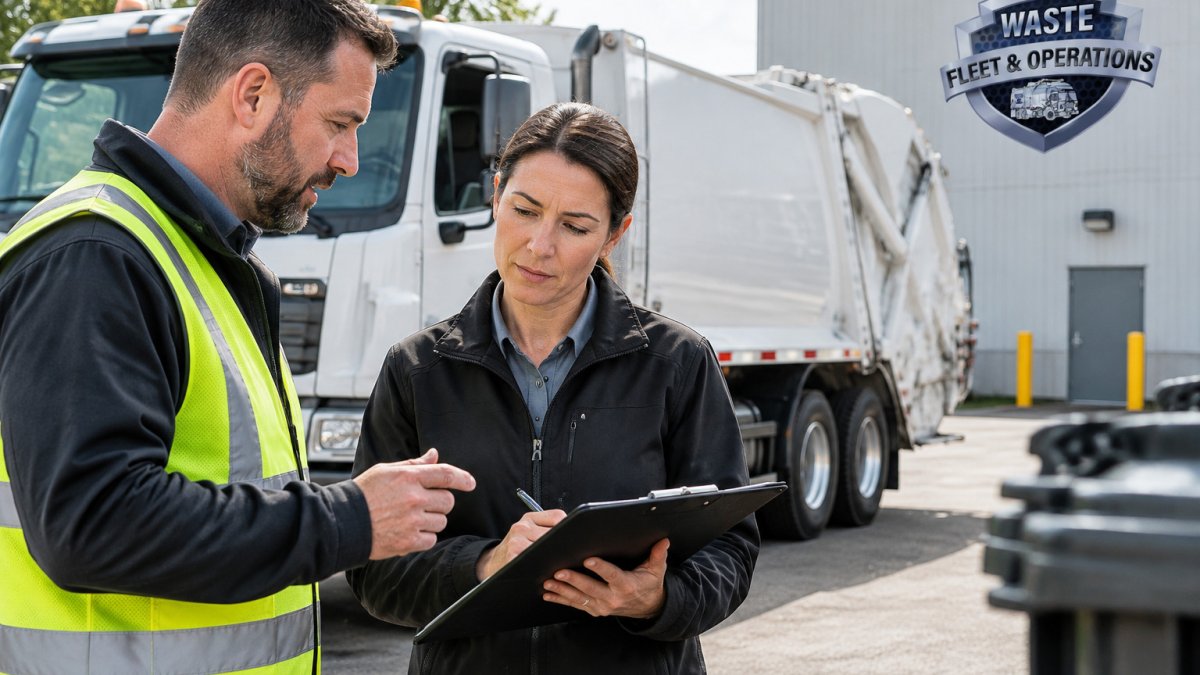
The output is typically a prioritized list rather than a long report. Operations that act on the top three or four findings tend to see results faster than those that try to fix everything at once. A good assessment also names who owns each action, which is often where the real work begins.
Preventive Maintenance Training for Waste Fleets: Making It Stick
Training is where most waste fleet improvement efforts succeed or fail. The technical content is rarely the problem. The harder challenge is changing daily habits in a shop where crews are busy and old methods feel faster.
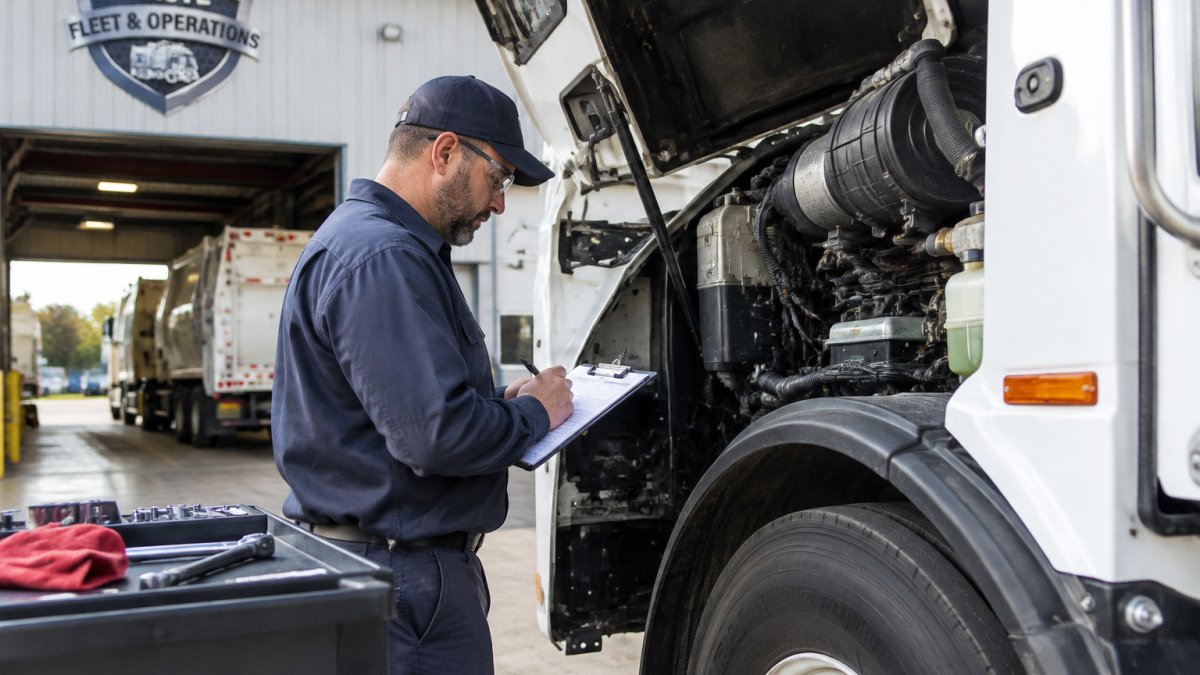
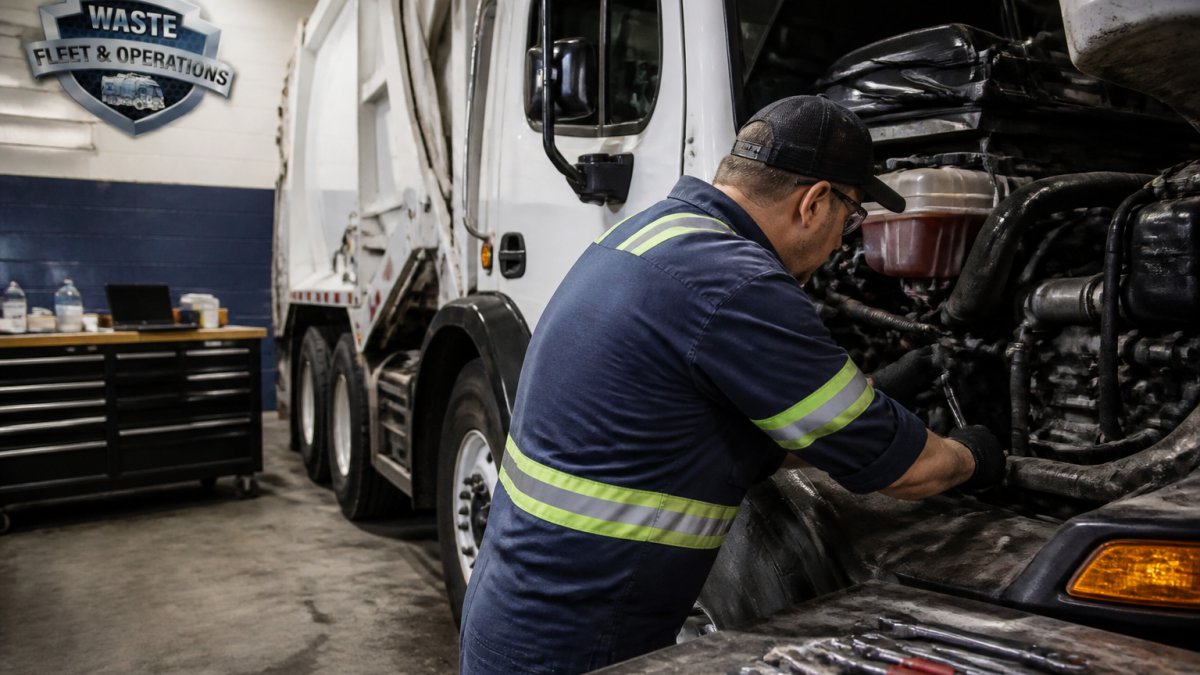
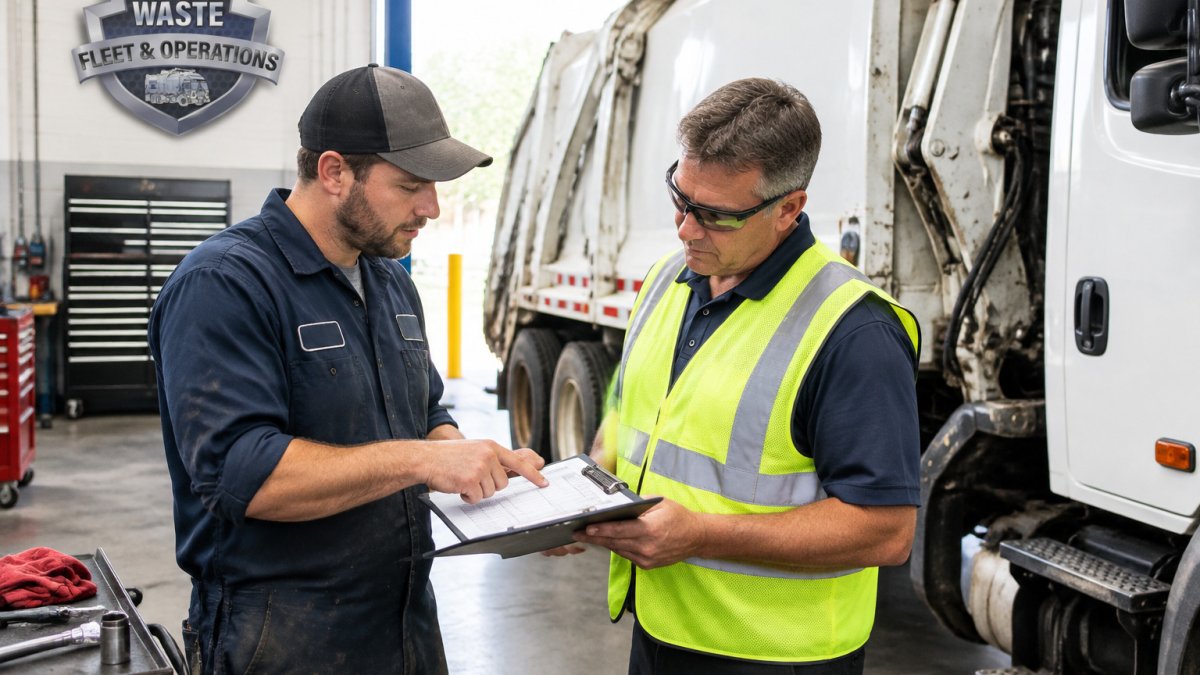
Effective programs tend to share a few traits. They are built around the fleet's actual trucks rather than generic textbook examples. They include hands-on work on real equipment, so technicians practice the exact inspections they will perform on shift. And they connect each task to a result the crew cares about, such as fewer late-night callouts or shorter repair times.
Watch out: a training session that ends without a follow-up schedule is likely to be forgotten within weeks. Build in short check-ins at 30, 60 and 90 days, and assign a named person to review completed inspections.
Waste Fleet & Operations delivers hands-on training with your trucks, not in a classroom, and it is led by Master Diesel Technicians with 40 years of industry experience.
Why Training Fails Without Follow-Through
Most maintenance training is forgotten within a few weeks, and the reasons are predictable. The breakdown on why waste fleet training fails and how to fix it covers the most common causes and fixes. A technician learns a better inspection method, returns to a backlog of work orders, and falls back on the way things have always been done. No one checks whether the new method is being used, so the habit never takes hold.
A common mistake is treating training as a one-time event with a certificate at the end. The more durable approach is to attach measurable checkpoints to the training: inspection completion rates, repeat-repair counts and time-to-repair. When those numbers are reviewed in regular meetings, the new practice becomes part of how the shop is run.
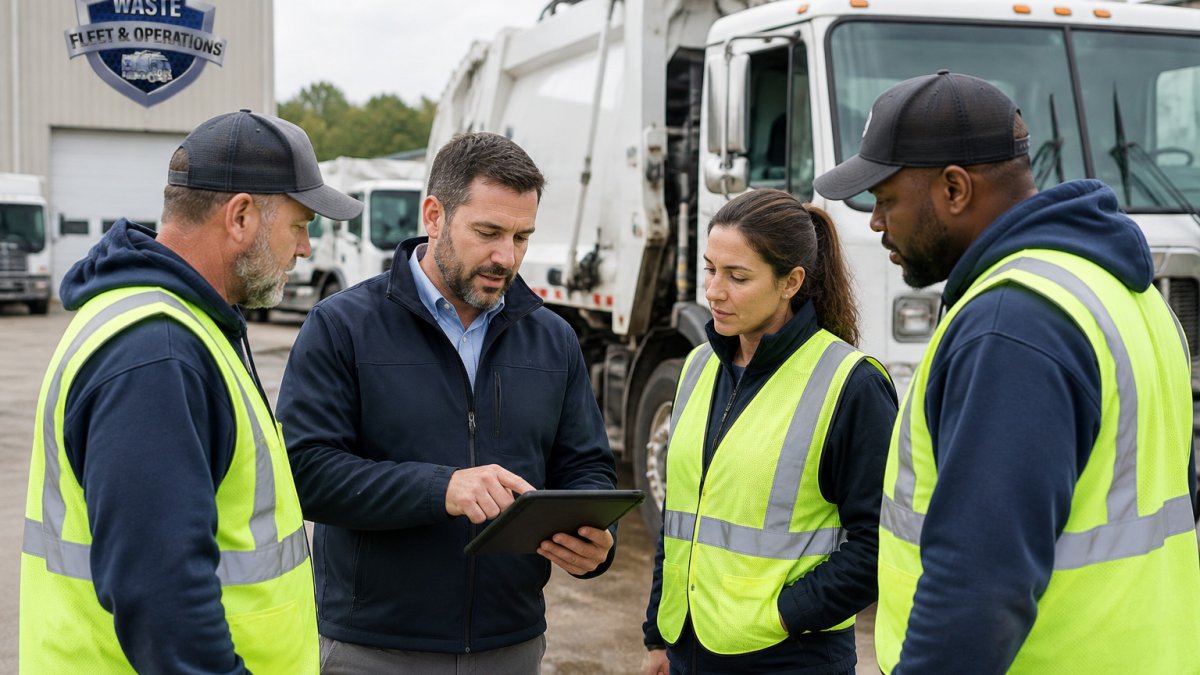
Another factor is communication between the shop floor and management. When supervisors do not know which problems technicians see most often, they cannot set priorities that match the work. Training that includes both groups tends to close that gap, because each side hears the other's constraints directly.
Fleet Consulting vs. Fleet Management Software: Where Each Fits
Book My Complimentary Discovery Call →
Fleet management software and fleet consulting solve different problems, and many operations need both. Software records and organizes data: fault codes, mileage, work orders, fuel use and route timing. Consulting changes how people use that data and the processes around it.
Software is strong at visibility. It can flag a truck that is due for service or show repeat faults across a unit. It does not, by itself, teach a technician what a recurring fault means or change how a supervisor sets the day's priorities. A system full of accurate data can still produce breakdowns if no one acts on it.
Consulting tends to fit where processes are the bottleneck: inconsistent inspections, unclear ownership of repairs, or a communication gap between the shop and management. Software tends to fit where data is scattered and reporting is slow. Many operators find that consulting first clarifies the process, and that software then supports the improved process more effectively. Tools from other providers can be evaluated on the same criteria: whether they reduce the specific failures found in the assessment.
Waste Fleet Due Diligence for Acquisitions and Capital Purchases
Fleet condition is a major factor in any waste company acquisition or large capital purchase. A fleet that looks adequate on paper can carry deferred maintenance that surfaces within months of closing. Due diligence is the process of finding those liabilities before the deal is signed.
A practical review typically covers maintenance records, the age and use of each unit, recent repair history, and the condition of major components such as engines, transmissions and compaction systems. It should also examine whether the existing shop has the staff and parts to keep the fleet running after the transaction.
Buyers and investors should ask for the raw work order data, not only summary reports. Patterns such as repeat repairs on the same unit, long gaps between inspections, or heavy reliance on emergency parts purchases often indicate problems the seller has not disclosed. Catching these signals early gives the buyer room to negotiate or plan a capital reserve.
How to Measure Whether Fleet Consulting Is Paying Off
Measuring the return on fleet consulting requires agreed baselines before work begins. Without them, improvements are hard to prove and easy to dispute. Operations should record current breakdown frequency, road calls, maintenance spend per unit and average time to repair before the engagement starts. The step-by-step ROI calculation guide for waste fleet consulting walks through turning those figures into a return estimate.
Useful metrics include daily breakdown counts, road calls per month, percentage of inspections completed on schedule, repeat-repair rate and total maintenance cost per vehicle. Reviewing these figures monthly shows whether changes are holding or fading. The guide on measuring success in waste fleet training explains how to set up these reviews. A sudden improvement that disappears after the consultant leaves usually points to a training or follow-through gap.
Waste Fleet & Operations includes root cause analysis and ongoing progress measurement, so clients can see which changes are working.
Choosing a Fleet Consultant for Your Size of Operation
Consultants vary widely in the size of operation they serve, the depth of their hands-on work and the way they measure results. Choosing well starts with being honest about your fleet. A 15-to-20-truck operation has different needs from a regional hauler running hundreds of units.
When evaluating options, ask how the consultant structures work around your schedule, whether training happens on your own trucks, how progress will be measured, and what happens after the initial engagement ends. Ask for references from operations of similar size. Confirm that the consultant understands waste collection specifically, since refuse equipment and routes behave differently from general trucking.
For smaller operations, a focused engagement on the two or three biggest breakdown causes may deliver more value than a broad program. Larger fleets often benefit from a longer engagement that builds internal capability. Either way, Waste Fleet & Operations offers a complimentary discovery call.
Frequently Asked Questions
What do fleet consultants do for waste companies?
Fleet consultants for waste companies review how trucks are maintained, repaired and dispatched, then build a plan to reduce breakdowns and maintenance spend. Typical work includes a fleet assessment, root cause analysis of repeat failures, hands-on preventive maintenance training for shop technicians, and progress tracking after the consultant leaves. The most useful consultants work inside your operation with your trucks rather than handing over a generic template. Ask for examples of how they measured results at similar haulers before you commit.
How can fleet consulting reduce breakdowns and maintenance costs?
Breakdowns usually come from a small set of repeated causes such as missed inspections, delayed fluid service, or defects caught too late. Consulting work identifies those root causes with your own repair records, then sets up inspection routines and training so technicians catch problems early. Reducing daily breakdowns and road calls is the most common goal, and results depend on your starting point, fleet age and how consistently the new routines are followed. Measure before and after using your own breakdown and work-order data.
What is the difference between fleet consulting and fleet management software?
Fleet management software records and reports on what is happening: work orders, inspections, fuel, and vehicle history. Fleet consulting changes how people do the work, using training, process design and leadership support. Software without trained technicians and clear procedures produces clean data about the same breakdowns. Many waste haulers use both, with software providing the tracking and consulting providing the habits that the data is meant to reflect.
How should a waste company compare fleet consulting providers?
Compare providers on waste-industry experience, whether training happens on your own trucks, how root causes are identified, and how success is measured and reported. Ask who will actually deliver the training and whether they have hands-on diesel or shop background. Request references from haulers of a similar size, since a provider used to large corporate fleets may not suit a 15-to-20-truck operation. Clarify scope and budget in writing, because pricing depends on fleet size, scope and schedule, and current pricing is available directly from Waste Fleet & Operations.
Ready to find out where your fleet is losing time and money? Book My Complimentary Discovery Call with Waste Fleet & Operations, and get a clear view of the breakdown causes that matter most for your trucks.