 blog
Is a Waste Management Consultant Worth the Investment?
Last Updated: November 10, 2026
Quick Summary
A waste management consultant is worth the investment when you need hidden fleet costs exposed and fixed, not just advice. They audit maintenance and routing, train technicians on your trucks, and track KPIs against a baseline. Waste Fleet & Operations reports clients cutting daily breakdowns by 40-50% and road calls by 50%, targeting 1.5x to 2x ROI inside three months.
- A waste fleet operational audit traces cost from the shop floor to the scale house and compares it against cost per ton.
- Preventive maintenance training is led by Master Diesel Technicians with 40 years of industry experience and includes root cause analysis.
- A fleet due diligence review examines fleet condition and maintenance history before an acquisition so buyers know what they are buying.
- A baseline captured in the first two to four weeks anchors every later claim, with monthly fleet reporting and quarterly diversion reporting.
- Ask for two references and check scope, deliverables, staffing, and exit criteria before signing with any consultant.
Table of Contents
- What a Waste Management Consultant Actually Does for Your Fleet
- How a Waste Fleet Operational Audit Exposes Hidden Costs
- Preventive Maintenance Training for Waste Haulers That Sticks
- Fleet Due Diligence Services Before You Buy Trucks or a Company
- Pricing and Engagement Models: What to Expect
- Measurable Outcomes and KPI Benchmarks to Track
- How to Choose a Waste Management Consultant
- Book Your Complimentary Discovery Call
- Frequently Asked Questions
What a Waste Management Consultant Actually Does for Your Fleet
A waste management consultant is an outside specialist who audits, redesigns, and trains your operation to cut fleet costs and breakdowns. The problems that hurt most in waste fleet operations are often invisible from the office.
Where do consultants fit in the waste industry? According to the U.S. Environmental Protection Agency's waste management guidance, solid waste operations face growing pressure to improve efficiency and diversion, and fleet reliability sits at the center of both.
The work usually falls into four buckets:
- Operational audits of maintenance and routing processes
- Hands-on training for technicians and supervisors
- Due diligence before fleet or company acquisitions
- Leadership coaching to close shop-to-management gaps
Most guides treat consulting as advice. In practice, the value is in implementation, and that means someone on site with your trucks.
How a Waste Fleet Operational Audit Exposes Hidden Costs
The biggest mistake haulers make is judging fleet health by the monthly maintenance invoice. That number hides the expensive part: breakdowns, road calls, and missed routes.
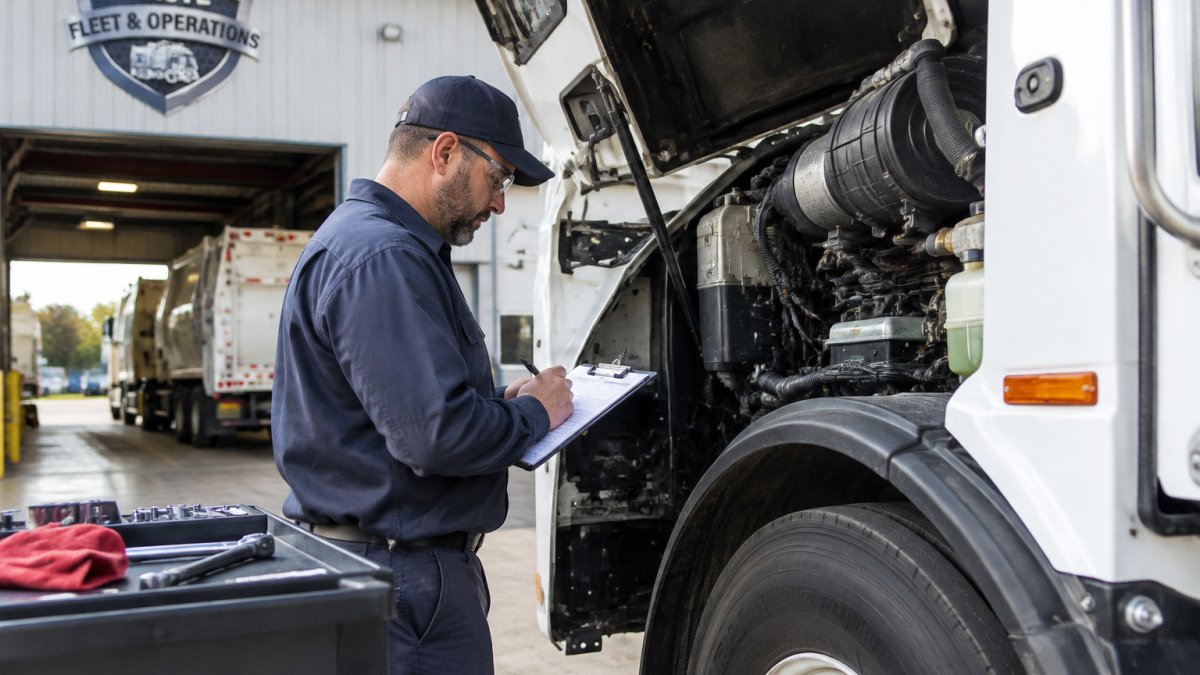
A waste fleet operational audit traces cost from the shop floor to the scale house, examining how work orders are written, how parts are ordered, and how a truck is released back to a route, and compares that against cost per ton. If you want to see the full scope and deliverables before engaging anyone, review our waste fleet operational audit services guide.
From Process Audit to Cost Per Ton
Cost per ton is the metric that connects maintenance to revenue. A truck that breaks down twice a week still gets billed to a route, but the labor, missed pickups, and overtime land somewhere. A process audit finds where.
Common findings in waste fleet audits include:
- PM intervals set by calendar instead of engine hours or duty cycle
- No root cause analysis, so the same failure repeats monthly
- Parts inventory that forces overnight shipping on routine items
- Route assignments that overload the oldest trucks
If you want to start assessing your own operation, our waste hauling operational audit checklist walks through each of these areas step by step.
Preventive Maintenance Training for Waste Haulers That Sticks
Training fails when it happens in a classroom and ends when the consultant leaves. The fix is training on your trucks, with your technicians, built around your routes.
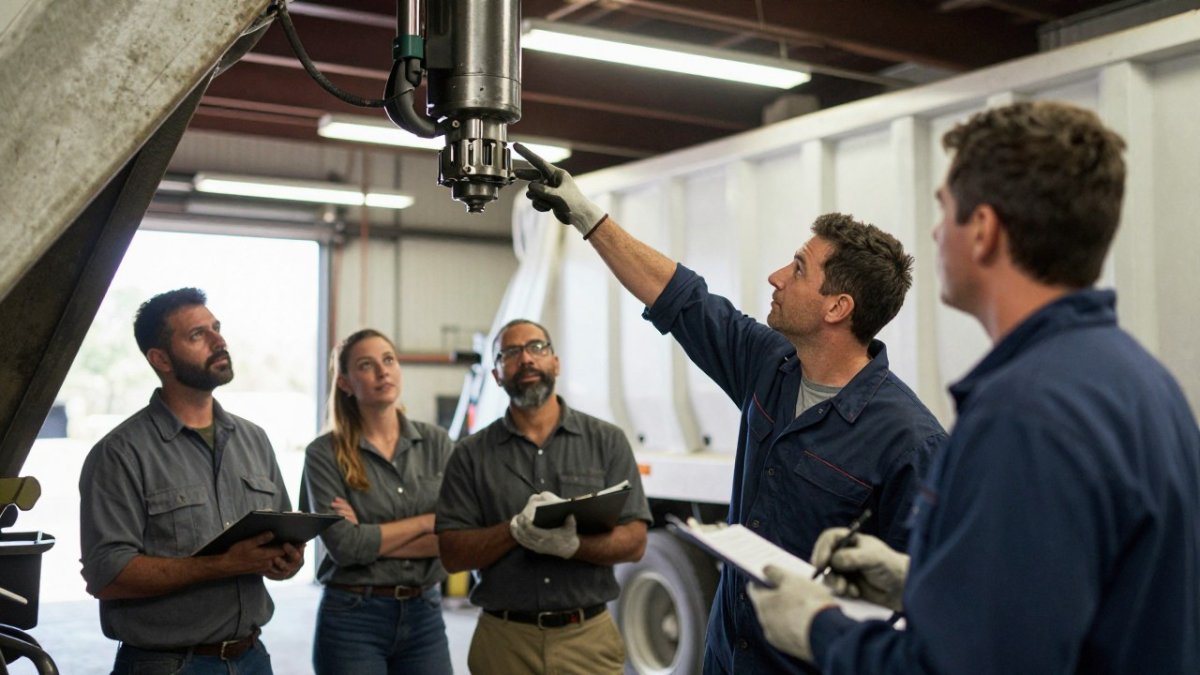
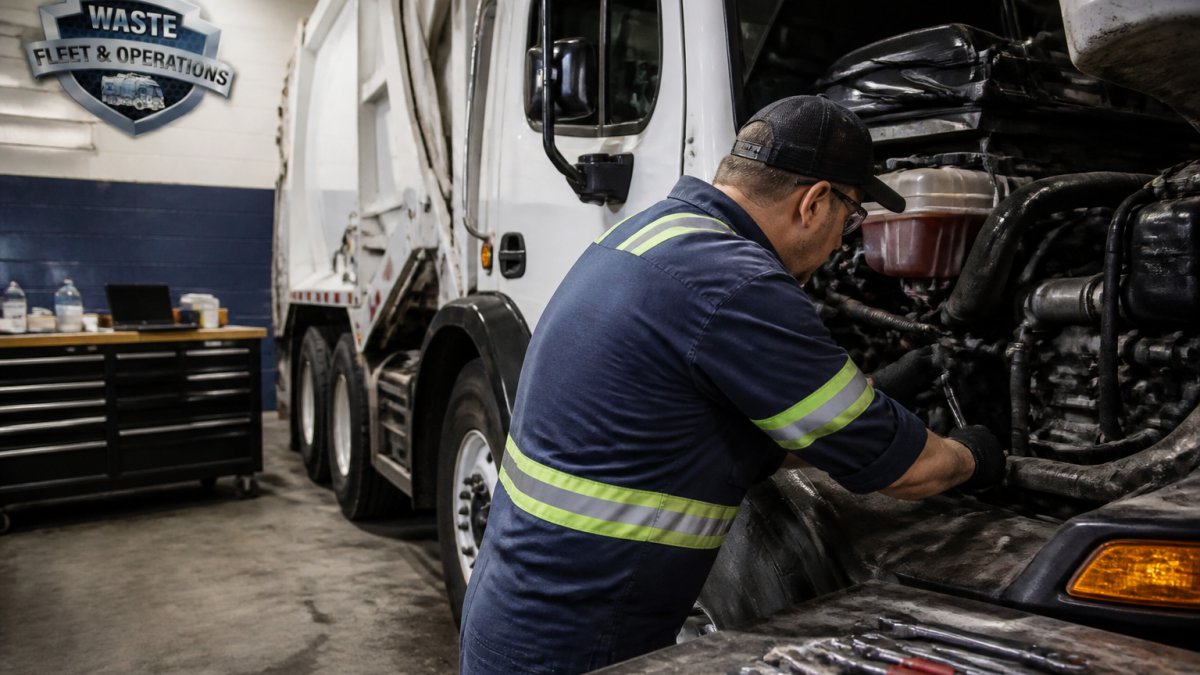
Our preventive maintenance training for waste haulers is led by Master Diesel Technicians with 40 years of industry experience, and it includes root cause analysis so your team learns to fix causes, not symptoms. If you are building a longer-term program, this guide on building a waste fleet maintenance training program goes deeper on structure and reinforcement.
Fleet Due Diligence Services Before You Buy Trucks or a Company
Due diligence is where fleet consulting pays for itself fastest. Buying trucks or an entire hauling company without inspecting maintenance history is how buyers inherit someone else's deferred repairs.
A fleet due diligence review examines the condition and maintenance history of the fleet before an acquisition, so buyers can understand what they are buying. Buyers facing an acquisition can apply our waste fleet due diligence checklist to their own evaluation before signing.
Watch out: a clean-looking maintenance log with perfect intervals is sometimes a sign of pencil-whipped inspections, not a well-run shop. Verify by pulling road call records and comparing them to the log.
Pricing and Engagement Models: What to Expect
Pricing for waste management consulting depends on scope, fleet size, and how long implementation runs. For current pricing or a quote, contact Waste Fleet & Operations through its website.
Most engagements follow one of three models:
| Engagement Model | What It Covers | Best For |
|---|---|---|
| Single audit | One-time operational review with findings report | Buyers testing the waters |
| Audit plus training | Review followed by on-site technician and supervisor training | Fleets with recurring breakdowns |
| Ongoing advisory | Scheduled reviews, KPI tracking, leadership coaching | Multi-site or acquisition-heavy operations |
If budget is the concern, say so early. Scope can be phased, and a focused audit is a legitimate starting point. To weigh cost against return before you commit, our step-by-step guide to calculating ROI for waste fleet consulting shows the math.
Measurable Outcomes and KPI Benchmarks to Track
Success in waste management consulting is measurable, and any consultant who cannot name the metrics up front is guessing. We track outcomes against a baseline captured in the first weeks of the engagement, and we separate fleet metrics from waste-stream metrics so you can see which lever moved.
Fleet and operations KPIs
- Daily breakdowns per truck
- Road calls per month
- PM compliance rate against schedule
- Mean time between failures by component
- Maintenance cost per truck and per ton
Waste-stream and cost KPIs
Many providers discuss efficiency and cost reduction without showing how to measure them. The metrics below connect the shop to the scale house:
- Diversion rate. The share of waste diverted from landfill through recycling, composting, or reuse. Track by stream and by site, not as a single company-wide number.
- Contamination rate. The share of recyclables that are actually trash. High contamination turns a recycling program into a disposal cost, and it is the most common reason diversion gains disappear.
- Cost per ton. Total collection, hauling, disposal, and maintenance cost divided by tons handled. This is the number that lets you compare sites and vendors fairly.
- Landfill volume. Tons or cubic yards sent to disposal per month, tracked against baseline.
- Cost per stop and cost per route. Useful for spotting routes that are overloaded or underloaded.
Baseline and reporting cadence
A baseline captured in the first two to four weeks is the anchor for every later claim. Without it, a 25% improvement is a story, not a result. Set a reporting cadence up front: monthly for fleet and cost metrics, quarterly for diversion and contamination, and an annual review that compares actuals to the baseline and to the prior year.
Watch out: a consultant who reports only the metrics that improved is showing you a highlight reel. Ask for the full dashboard, including the metrics that did not move.
What should you realistically expect?
Waste Fleet & Operations reports that clients have reduced daily breakdowns by 40-50% and road calls by 50%, with a targeted 1.5x to 2x ROI inside three months. A VP of Operations at a private regional hauler reported reducing daily breakdowns by 25% to sometimes 50%. A maintenance manager at another private hauler said the program is identifying issues before they become major problems.
How to Choose a Waste Management Consultant
Choosing a consultant involves several checks. Reviewing references, proposal scope, and exit criteria before signing is a sound place to start.
Credentials and waste-specific experience
General fleet consultants learn your operation on your dime. Ask for the consultant's direct experience with refuse trucks, transfer stations, and route logistics, not just diesel maintenance. Request the names of two haulers or municipal sanitation teams of similar size and fleet mix, and call them. A common pattern is that the strongest references come from operations that had the same failure mode you do, not the largest logo on the website.
Scope and proposal evaluation
A credible proposal states what is in scope and what is not. Compare proposals on these lines:
- Sites and trucks covered. How many locations, how many units, and whether the audit includes route observation or only shop records.
- Deliverables. A findings report is not the same as an implementation plan. Ask for the table of contents or a sample redacted report.
- Staffing. Who is on site, how many days, and whether the person who sold the work is the person who delivers it.
- Data you must supply. Maintenance records, road call logs, parts invoices, and route sheets. If the consultant does not ask for these up front, the audit will be shallow.
- Timeline and milestones. A phased schedule with a baseline week, audit weeks, and a findings review.
Watch out: a proposal that quotes a fixed price before reviewing your maintenance records is pricing a template, not your operation.
References and site visits
Ask for two references you can call and, if possible, one site visit to a current or past client. During the call, ask what changed after the engagement, what the consultant missed, and whether the client would hire them again. A reference who cannot name a specific metric that improved is a warning sign.
Exit criteria and knowledge transfer
You should know what "done" looks like and what your team keeps after the engagement ends. Ask for the training materials, checklists, and KPI dashboard your staff will own. The best engagements leave your supervisors able to run the audit themselves the next time.
Vendor and service-provider evaluation
If your consulting scope includes evaluating hauling, recycling, or disposal vendors, the consultant should show you how they compare providers on total cost per ton, service-level terms, contamination penalties, and contract flexibility, not just the headline rate. Ask whether they will sit in on vendor negotiations or only recommend a shortlist. A common pattern is that haulers overpay because contracts auto-renew without a market check, and a consultant who does not review contract terms is leaving money on the table.
A common mistake is choosing on price alone.
Book Your Complimentary Discovery Call
The hardest part of fleet improvement is not knowing where to start. Most haulers suspect their maintenance costs are too high but cannot pinpoint which process is bleeding money, and that uncertainty usually delays action for another year.
Waste Fleet & Operations builds engagements around your operation, delivers hands-on training with your trucks, and includes root cause analysis and ongoing progress measurement.
Get started with Waste Fleet & Operations and find out what your fleet is actually costing you.
Frequently Asked Questions
What does a waste management consultant do for fleet operations?
A waste management consultant reviews your maintenance records, route data, and shop practices to find where breakdowns and costs originate. That usually means running a waste fleet operational audit, building a preventive maintenance program your technicians will follow, and setting up reporting so management can see cost per ton and road call trends. The best consultants work on your trucks with your people rather than handing over a template.
How much does it cost to hire a waste management consultant?
Pricing depends on scope, fleet size, and whether you need a one-time audit or ongoing training. Engagement structures vary, so ask for a scoped proposal. Because every operation differs, ask for a scoped quote rather than a rate card. Request a discovery call to walk through your fleet size and goals so you get pricing tied to actual work.
What ROI should I expect from preventive maintenance training for waste haulers?
Results vary by starting point, but One private regional hauler reported reducing daily breakdowns by 25% to sometimes 50%, and the firm targets a 1.5x to 2x return within three months. Track road calls, breakdown frequency, and maintenance spend per truck before and after training to measure your own results.
How do fleet due diligence services help before an acquisition?
Fleet due diligence services assess the true condition of trucks, maintenance backlogs, and shop practices before you commit capital. A consultant reviews service records and maintenance history to understand the fleet's condition before acquisition. This gives buyers and private equity partners a realistic picture of what the fleet will cost to run and repair after closing.