 blog
blog
Waste Fleet Operational Audit Services: A 2026 Guide
Table of Contents
- What Waste Fleet Operational Audit Services Actually Cover
- The Waste Truck Inspection Checklist: What Auditors Evaluate First
- Building a Fleet Maintenance Audit Checklist That Catches Problems Early
- How a Preventive Maintenance Program for Waste Trucks Reduces Downtime
- Waste Fleet Due Diligence: Auditing Before You Buy or Invest
- Waste Fleet KPIs and Benchmark Ranges to Track After the Audit
- Turning Audit Findings Into a Prioritized Improvement Plan
- Frequently Asked Questions
Last Updated: October 16, 2026
What Waste Fleet Operational Audit Services Actually Cover
Waste fleet operational audit services are independent reviews of how a hauling operation runs its trucks, shops, and routes, measured against documented standards rather than habit. At Waste Fleet & Operations, we treat an audit as a diagnostic, not a report card. It answers one question: where is the fleet losing money, uptime, and safety margin?
The scope usually spans four areas:
- Fleet condition, vehicle reliability, roadworthiness, and inspection records
- Maintenance operations, preventive maintenance schedules, work order flow, and parts inventory
- Route and dispatch performance, route planning, missed pickups, and fuel consumption patterns
- People and compliance, driver safety, operator training, and regulatory documentation
Most operators assume their biggest problem is aging equipment. In practice, the audit often finds the gap sits in process, not iron.
Audit Scope, Evidence Collection, and Scoring Criteria
An audit is only as good as the evidence behind it. Auditors collect three evidence types: document review (maintenance records, inspection logs, work orders), physical inspection (vehicle condition, shop practices, equipment upkeep), and data pulls from fleet management systems and telematics.
Scoring typically uses a simple maturity scale:
| Score | Rating | What It Means |
|---|---|---|
| 1 | Reactive | Breakdowns drive the schedule; no preventive maintenance program |
| 2 | Developing | Some PM scheduling, inconsistent records |
| 3 | Managed | Documented PM program, tracked KPIs |
| 4 | Optimized | Data-driven maintenance, root cause analysis on repeat failures |
The score matters less than the pattern. Three vehicles failing the same inspection point is a process problem, not a truck problem.
The Waste Truck Inspection Checklist: What Auditors Evaluate First
Auditors start with the waste truck inspection checklist because it exposes the gap between what a shop says it does and what the trucks show.
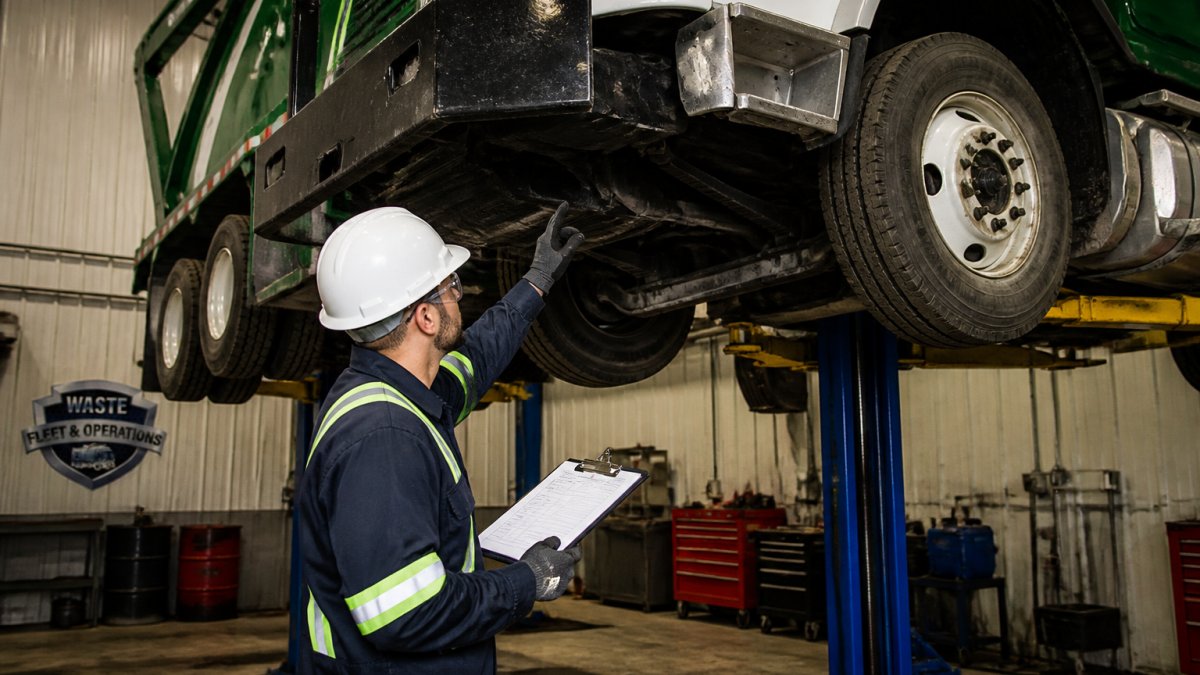
The evaluation usually covers:
- Brakes, air systems, and hydraulic lines under load conditions
- Tire wear patterns, which often reveal alignment or route-loading issues
- Body, packer, and lift mechanisms specific to collection equipment
- Fluid leaks and corrosion on frames and undercarriage
- Cab safety equipment, lighting, and backup alarms
What most guides miss is that inspection protocols fail for a boring reason: technicians sign off on items they were never trained to check properly.
Building a Fleet Maintenance Audit Checklist That Catches Problems Early
A fleet maintenance audit checklist works when it forces a decision at every line, not just a signature. Build yours around four columns: what to check, how to check it, what "fail" looks like, and who owns the fix.
- Every unit has a documented PM interval tied to engine hours, not calendar dates alone
- Inspection results feed directly into work orders, not a separate binder
- Repeat failures trigger root cause analysis within 30 days
- Parts inventory is checked against actual consumption, not guesswork
- Technician certifications and training records are current
How a Preventive Maintenance Program for Waste Trucks Reduces Downtime
A preventive maintenance program for waste trucks reduces downtime by moving repairs off the route and into the shop on a planned schedule. That shift is where the real savings live.
Waste collection is brutal on equipment. Stop-and-go cycles, heavy loads, and hydraulic packers wear components faster than highway mileage suggests. A PM program built around actual duty cycles, not generic intervals, catches wear before it becomes a road call.
- Schedule PM by engine hours and route intensity, not just mileage
- Prioritize high-cycle units for more frequent inspection
- Track vehicle downtime by cause, not just by total hours
- Hold weekly reviews of open work orders with shop and operations together
The communication gap between shop floor and management is where most PM programs quietly die. Technicians see the warning signs weeks before dispatch does. Structured reporting closes that gap.
Waste Fleet Due Diligence: Auditing Before You Buy or Invest
Waste fleet due diligence is the pre-acquisition review of fleet condition, maintenance history, and operational records before capital changes hands. Buyers who skip it inherit every deferred repair the seller never documented.
For acquisitions, the audit focuses on:
- Maintenance records completeness and whether PM intervals were actually followed
- Vehicle condition versus stated age and mileage
- Deferred maintenance liability, priced unit by unit
- Route and dispatch data supporting the revenue assumptions in the deal
Waste Fleet KPIs and Benchmark Ranges to Track After the Audit
The audit sets a baseline. These metrics tell you whether anything actually improved. Track them monthly, and compare against your own pre-audit numbers rather than an industry average pulled from a trade magazine.
A KPI without a formula, a data source, and a target range is just a number someone argues about in a meeting. Define all three before you start tracking.
Book My Complimentary Discovery Call →
| KPI | Formula | Data Source | Typical Range for a Well-Run Waste Fleet | Direction to Watch |
|---|---|---|---|---|
| Fleet availability | Units ready for route ÷ total units, measured at dispatch | Dispatch system or daily yard count | 92-97% | Rising |
| Vehicle downtime hours | Total out-of-service hours ÷ unit, per month | Work order system | Under 8 hours per unit per month | Falling |
| Road calls per 1,000 miles | On-route breakdowns ÷ (total miles ÷ 1,000) | Telematics plus driver reports | Under 1.0 | Falling |
| PM compliance rate | PMs completed on time ÷ PMs scheduled | Maintenance system | 90%+ | Rising |
| Repeat failure rate | Failures recurring on the same unit within 90 days ÷ total failures | Work order history | Under 10% | Falling |
| Missed pickups | Stops not serviced on the scheduled day ÷ total stops | Route/dispatch records | Under 0.5% | Falling |
| Cost per route | Total route cost (labor, fuel, maintenance allocation) ÷ routes run | Accounting plus dispatch | Compare month over month, not to a published average | Falling |
| Fuel per mile | Gallons consumed ÷ miles driven | Fuel card plus telematics | Compare by route type, not fleet-wide | Falling |
| Maintenance cost per vehicle | Total maintenance spend ÷ active units, per year | Accounting plus work orders | Track trend, not a single target | Falling |
Three cautions on using these numbers:
- Benchmark against yourself first. A fleet running residential rear-loaders on tight urban routes will never match a roll-off operation running highway miles. Published averages blend those together and mislead.
- Watch the ratio, not the raw count. Ten road calls across 40 trucks is a different story than ten across 12 trucks. Normalize before you compare.
- Pair a leading indicator with a lagging one. PM compliance and repeat failure rate predict next quarter's downtime. Downtime hours and road calls confirm what already happened.
A common pattern is that availability looks healthy while PM compliance quietly slips, because technicians are pulling units off scheduled service to cover breakdowns. If those two lines diverge, the availability number is borrowing from next month.
Once the numbers are stable and trustworthy, they become the evidence base for the improvement plan, which is where most audits either pay off or gather dust.
Turning Audit Findings Into a Prioritized Improvement Plan
Audit findings become useful only when someone ranks them. A prioritized improvement plan sorts every finding by impact and effort, then assigns an owner and a deadline.
Most audit reports die in a binder because the findings are presented as a flat list. The fix is a repeatable scoring step that forces a ranking before anyone debates it.
Step 1: Score every finding on four axes
Rate each finding 1-5 on:
- Safety impact, could this injure a driver, helper, or the public?
- Compliance impact, does this create exposure under DOT, OSHA, or environmental rules?
- Cost impact, what does this cost per month if left alone?
- Service impact, does this cause missed pickups, late routes, or customer complaints?
Add the four scores. Findings scoring 16-20 go into the immediate queue. 11-15 go into the 90-day queue. 10 and below go into the annual capital plan. This is a judgment tool, not a precision instrument, its value is that it forces the conversation to happen once, in writing, instead of every week.
Step 2: Assign an owner, a deadline, and a verification method
Every finding in the immediate and 90-day queues needs three things:
- A named owner, a person, not a department. "Maintenance" is not an owner.
- A completion date, a specific date, not "Q3."
- A verification method, how you will confirm the fix worked. Usually this is a KPI movement, a re-inspection, or a spot audit of ten records.
Step 3: Sequence by dependency, not just by score
Some fixes unlock others. Training technicians on inspection protocol is cheap and fast, and it makes every downstream inspection finding more reliable. Installing telematics is expensive and slow, and it makes route and fuel findings measurable. Do the cheap, enabling work first even if a costlier finding scored higher, you will get better data for the expensive decision.
Step 4: Set a review cadence and hold it
- Weekly: open work orders and immediate-queue items, shop and dispatch together
- Monthly: KPI review against the pre-audit baseline
- Quarterly: re-score the 90-day queue and promote or retire items
A worked example
Suppose the audit finds: (a) three units with brake defects, (b) PM intervals set by calendar instead of engine hours, (c) no telematics on half the fleet, and (d) two technicians untrained on packer hydraulics.
Scored, that comes out roughly: brakes (safety 5, compliance 5, cost 3, service 4 = 17) into the immediate queue with a named shop lead and a 14-day deadline. PM interval redesign (safety 3, compliance 3, cost 5, service 4 = 15) into the 90-day queue. Packer hydraulic training (safety 4, compliance 2, cost 3, service 4 = 13) into the 90-day queue and sequenced first because it is cheap and enables better inspection findings.
Our approach includes root cause analysis and ongoing progress measurement, so findings turn into changed shop-floor behavior. As one maintenance manager at a private hauler put it, the program "is already showing benefits by identifying issues and problems with vehicles before they become major problems or breakdowns." Another VP of Operations reported cutting daily breakdowns by 25% to sometimes 50%.
Frequently Asked Questions
What does a waste fleet operational audit include?
A waste fleet audit examines vehicle condition, maintenance records, inspection protocols, route efficiency, fuel use, and driver safety procedures. Auditors collect evidence through shop floor observation, records review, and interviews with technicians and dispatchers. The scope typically covers fleet availability, preventive maintenance schedules, parts inventory, and the communication flow between shop and management. You receive a scored report with prioritized operational recommendations.
How can a waste fleet audit reduce maintenance costs?
Most waste haulers lose money to repeat breakdowns and reactive repairs that cost three to five times more than planned maintenance. An audit identifies the root causes: skipped inspections, overdue service intervals, or parts ordered at premium prices. Waste Fleet & Operations clients have seen significant reductions in daily breakdowns and maintenance costs after implementing audit recommendations. The key is catching issues before they become road calls.
How often should a waste fleet be audited?
A full operational audit every 12 to 18 months works for most haulers. Companies with older fleets or high breakdown rates may benefit from a follow-up review at six months to confirm corrective actions stuck. If your operation adds routes, acquires vehicles, or changes disposal sites, schedule an audit within 90 days of that change. Ongoing progress measurement between full audits keeps findings from fading.
What data is needed for a fleet operational audit?
Gather maintenance records for at least 12 months, including repair orders, parts costs, and downtime logs. Pull route sheets, missed pickup reports, and fuel consumption data. Have your inspection checklists, preventive maintenance schedules, and technician training records ready. If you use fleet management software or telematics, export the fault codes and utilization reports. Auditors also interview drivers and shop staff to compare what records show against what actually happens.