 Ultimate guide
Preventive Maintenance Strategies for Sanitation Trucks
Quick Summary
Preventive maintenance for sanitation trucks means scheduled inspection, service, and replacement of components before they fail. Set service intervals by route severity and operating hours, inspect core systems and hydraulics on a set schedule, and track results to keep refuse trucks on the road.
- Score each route as light, moderate, or severe using stops, grade, road surface, and packer cycles.
- Shorten service intervals for severe routes, typically by roughly a quarter to a half of the baseline.
- Inspect hydraulic hoses along their full length and replace them on condition, not just on schedule.
- Grease every fitting on schedule, since a missed fitting can wear a joint or pin well before its normal life.
- Review intervals quarterly against findings and track planned versus reactive work orders as key indicators.
Table of Contents
- Why Preventive Maintenance Matters for Sanitation Fleets
- Building a Garbage Truck Preventive Maintenance Schedule
- Refuse Truck Maintenance Checklist: Core Systems to Inspect
- Inspecting Packers, Lift Mechanisms, and Hydraulic Systems
- Cleaning, Washdown, and Corrosion Prevention
- Common Garbage Truck Repairs and How Preventive Work Reduces Them
- Tracking Maintenance with Fleet Software and KPIs
- Lockout/Tagout and Safety Procedures During Service Work
- Frequently Asked Questions
Sanitation fleets live or die by uptime. A rear loader that sits in the yard for two days on a Monday costs a route, overtime, and a crew standing around waiting for a replacement. Preventive maintenance is the discipline that keeps those trucks on the road, and most of the gains come from doing a few predictable things consistently rather than from exotic technology.
This guide from Waste Fleet & Operations covers building a preventive maintenance program for refuse trucks: setting service intervals against real duty cycles, what to inspect on each system, handling packers, lift mechanisms, and hydraulics, and tracking results. Preventive maintenance is the scheduled inspection, service, and replacement of components before they fail. Practical steps for cutting truck downtime are laid out in a separate guide.
Why Preventive Maintenance Matters for Sanitation Fleets
Refuse trucks run a harder life than most commercial vehicles.
The business case is straightforward. Scheduled work happens during planned downtime with parts ordered in advance; unplanned failures happen on the route and often cascade into secondary damage.
A common mistake is treating preventive maintenance as a checkbox exercise. A technician who signs off without checking the tires, hydraulic sight glass, or air dryer is generating paperwork, not reliability.
Building a Garbage Truck Preventive Maintenance Schedule
A workable schedule starts from what the truck actually does, not a generic manufacturer interval. Two identical trucks can have very different needs if one runs dense downtown routes and the other covers rural roads. Build the schedule from duty cycle data, then adjust as the trucks show you what they need.
Setting Service Intervals by Route Severity and Operating Hours
Route severity drives wear more than mileage. Stop-and-go collection, steep grades, potholed streets, and heavy packer use accelerate brake, tire, and hydraulic wear.
Score each route on four factors: stops per shift, average grade, road surface, and packer or lift cycles per shift. A dense residential route with hundreds of stops, rolling grades, and rough pavement scores severe; a long rural haul with few stops and smooth roads scores light. Document the score and assign it to the truck that runs it.
Operating hours matter as much as miles. A truck that idles during packing or waits at curbside lifts accumulates engine and hydraulic hours that mileage-based intervals miss.
A common pattern is a baseline interval from the manufacturer's recommendation, adjusted by a severity multiplier: light routes at baseline, moderate routes shortened by roughly a quarter, severe routes by a third to a half.
Scheduling Inspections Around Route Duty Cycles
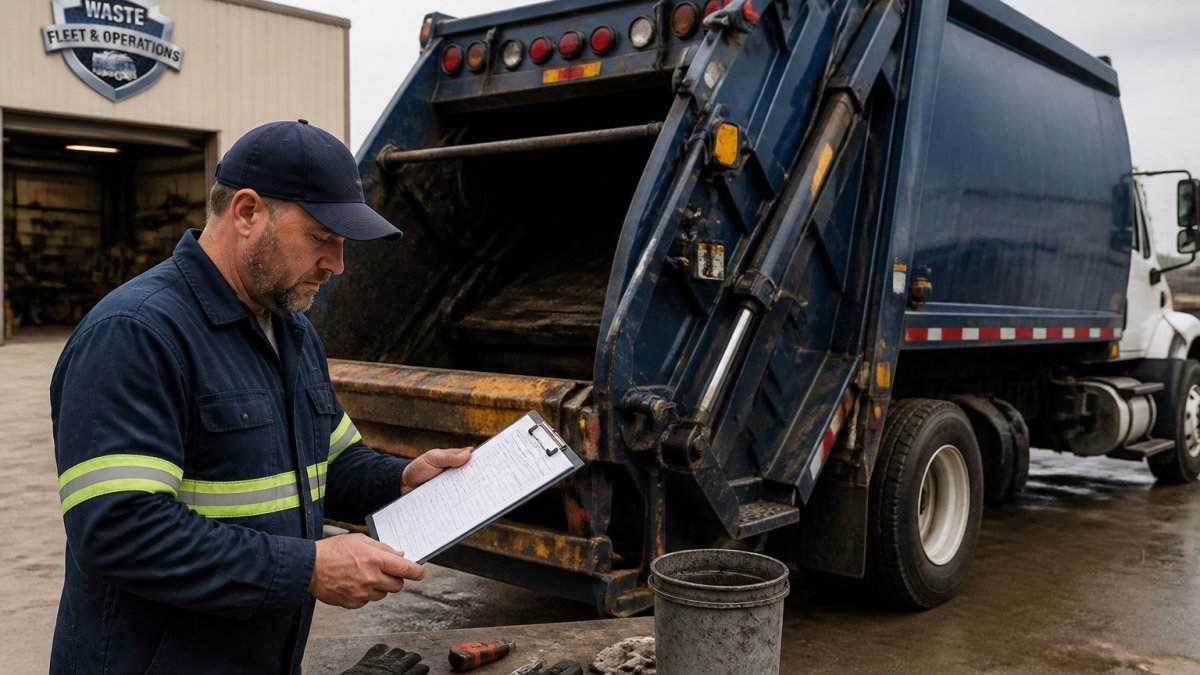
The best inspection schedule is one crews can follow. Pre-trip inspections by drivers catch leaks, warning lights, and tire damage before a shift. Weekly or monthly shop inspections go deeper into systems drivers cannot assess.
Plan shop time during low-demand windows, such as mid-week or between peak collection days, so scheduled work does not collide with the routes that need the trucks most.
Adjusting Intervals for Seasonal and Severe Duty
Seasonal use changes the picture. Winter road salt accelerates corrosion, so increase washdown frequency and corrosion inspections. Leaf season and construction debris clog air filters and radiator fins faster, so tighten those inspections.
Severe duty also includes how the truck is operated. A truck that runs two shifts a day, or that is assigned to a route with heavy commercial containers and a front loader that lifts them all shift, is on severe duty regardless of its route score.
Reviewing and Documenting the Schedule
Review intervals quarterly against findings. If a route consistently produces early brake wear or hydraulic leaks, tighten its interval rather than waiting for the next failure.
Document the schedule per truck, including the route severity score, the hours and mileage thresholds, and the date each interval was last reviewed. That record lets a fleet manager defend the program to operations and show why a truck came off the road.
Refuse Truck Maintenance Checklist: Core Systems to Inspect
A checklist is only as useful as the detail behind each line. The items below are the core systems that appear on most refuse truck maintenance programs. Adapt them to your specific body and chassis.
Fluids, Engine, Cooling, and Air Filters
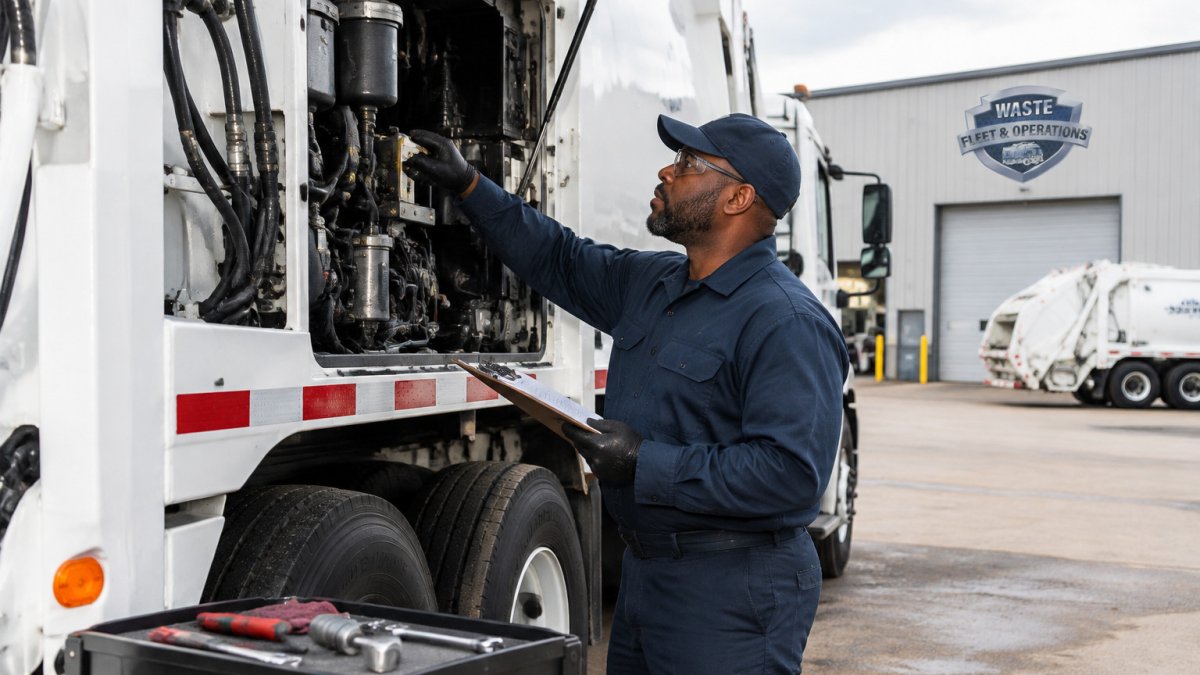
Check engine oil level and condition, coolant level and concentration, and transmission fluid. Look for contamination such as coolant in the oil or metal particles in the drain pan, which signal internal wear.
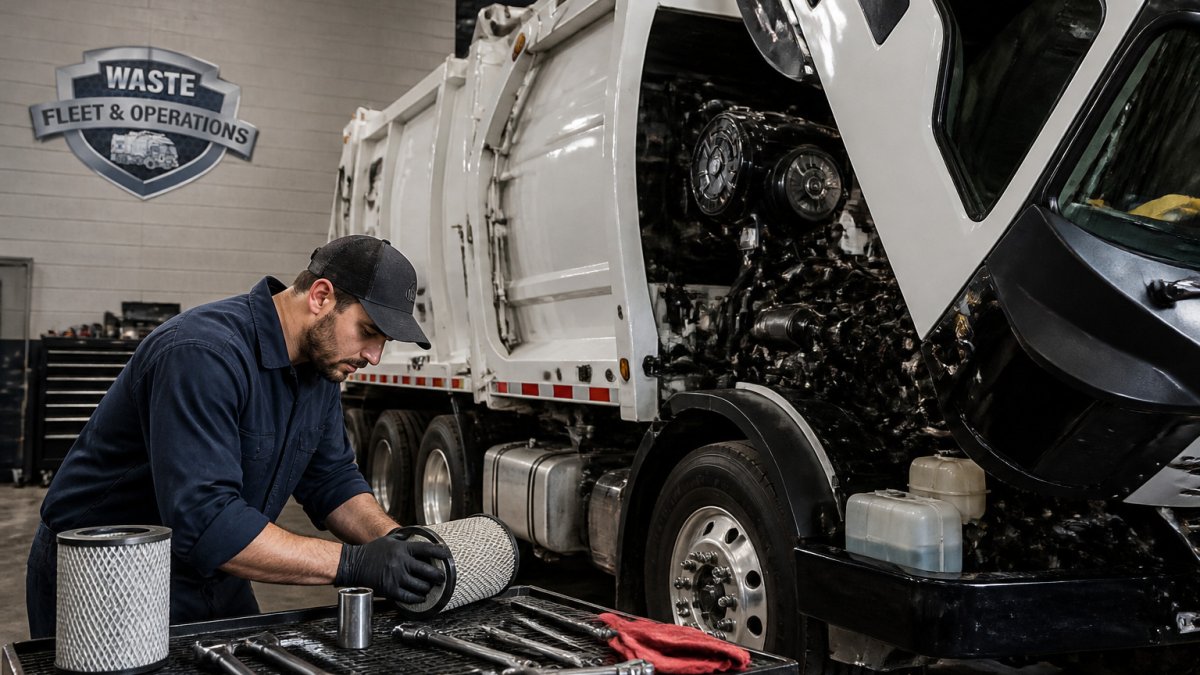
Replace air filters on a schedule tied to the operating environment rather than a fixed date. Dusty routes, construction debris, and leaf season can clog a filter in weeks.
Tires, Brakes, Air Brakes, and Lubrication
Check tire pressure against the manufacturer's specification at every inspection, because underinflation accelerates shoulder wear and increases fuel consumption.
Brake inspections should cover pad and shoe thickness, rotor or drum condition, and brake lines.
Lubrication is among the most neglected tasks in refuse fleets. Grease every fitting on schedule, including driveline joints, steering linkages, suspension pivots, and the body's pivot points and lift arms.
The core systems on a refuse truck and what each one needs at inspection:
| System | What to check | Key note |
|---|---|---|
| Fluids and engine | Oil, coolant, transmission fluid | Look for coolant in oil or metal particles |
| Cooling and air filters | Radiator and oil cooler fins, air filters | Leaves and grit clog fins; replace filters by environment |
| Tires | Pressure, uneven wear, tread, cuts | Check pressure at every inspection |
| Brakes and air system | Pads, shoes, rotors, air tanks, air dryer | Slow air loss signals a leak or failing valve |
| Lubrication | Every grease fitting on schedule | A missed fitting can wear a joint or pin early |
Inspecting Packers, Lift Mechanisms, and Hydraulic Systems
The body of a refuse truck is where sanitation-specific maintenance diverges most from ordinary fleet work. Packers, lift arms, and hydraulic systems operate under high pressure and repeated cycles, and their failures often stop the truck entirely. The inspection has to go component by component.
Hydraulic System Inspection
Start at the reservoir. Check fluid level with cylinder rods fully retracted and the truck on level ground, reading against the manufacturer's mark.
Inspect every hose along its full length, not just at the fittings.
Check the return filter and suction strainer on schedule. A clogged return filter starves the pump, raises fluid temperature, and accelerates wear across the whole system.
Book My Complimentary Discovery Call →
Watch pressure gauges during a full packer cycle.
Packer Inspection
On a rear loader, inspect the packer blade, packer panel, and tailgate for cracks, bending, and wear at the pivot points.
On a front loader, inspect the arms, fork assembly, and lift cylinder mounts for cracks and worn pins.
On an automated side loader, inspect the lift arm, grabber or cart tipper, and the arm's pivot and linkage.
On all body types, inspect the ejector panel, body floor, and structural welds for cracks.
Lift Mechanism and Body Hardware
Lift arms, pins, and bushings need the same lubrication as the chassis, often more. Grease every fitting on schedule, including body pivots, tailgate hinges, and lift-arm linkage.
Check the tailgate latches, body prop, and hoist cylinders. Confirm the body prop is functional and the hoist holds the body securely when raised. Inspect body mounts and the subframe for cracks and loose fasteners, since a loose body mount transfers load into the frame and can crack it.
Matching Inspection Depth to Body Type
A rear loader, a front loader, and an automated side loader do not fail in the same places. Build a separate inspection checklist for each body type your fleet runs, and weight the inspection toward the components that body cycles hardest. A fleet that runs all three should not be using one generic body checklist for all of them.
Cleaning, Washdown, and Corrosion Prevention
Refuse is corrosive. Leachate, road salt, and wet waste attack steel, aluminum, and wiring, and the damage is often hidden behind panels or under the body.
Wash the undercarriage, body interior, and packer area regularly, using the method your facility and local wastewater rules allow. Guidance on training the technicians who carry out washdown and inspection work helps keep this consistent.
After washing, inspect for paint damage and bare metal, and treat it before rust spreads. Protect electrical connectors and junction boxes from water intrusion.
Common Garbage Truck Repairs and How Preventive Work Reduces Them
Most refuse truck repairs fall into a predictable set of categories: hydraulic hose failures, brake wear, tire damage, electrical faults at the body controls, cooling-system problems, and worn lift-arm components. Proven breakdown-prevention strategies complement scheduled maintenance for these failure types.
Hose failures decrease when hoses are inspected for abrasion and replaced on condition. Brake wear becomes predictable when pad thickness is measured at every inspection and routes are classified by severity.
The point is not that preventive work eliminates repairs. It converts unplanned repairs into planned ones, which usually cost less and cause far less route disruption.
Tracking Maintenance with Fleet Software and KPIs
A preventive maintenance program is only as good as the data behind it. Fleet maintenance software records service history, schedules upcoming work, and flags overdue items.
Useful KPIs include the percentage of work orders that are planned versus reactive, mean time between failures by truck class, road calls per thousand miles or engine hours, and the percentage of scheduled services completed on time. Current maintenance KPI benchmarks show which of these numbers matter most. Track maintenance cost per truck and per route to identify units consuming disproportionate resources. Cost reduction tips explain how to act on those numbers.
Review these metrics monthly with the shop supervisor and route operations. The most valuable conversations happen when the data shows a unit or route that is out of line with the rest of the fleet.
Use that visibility to set realistic targets and adjust them as the program matures.
Lockout/Tagout and Safety Procedures During Service Work
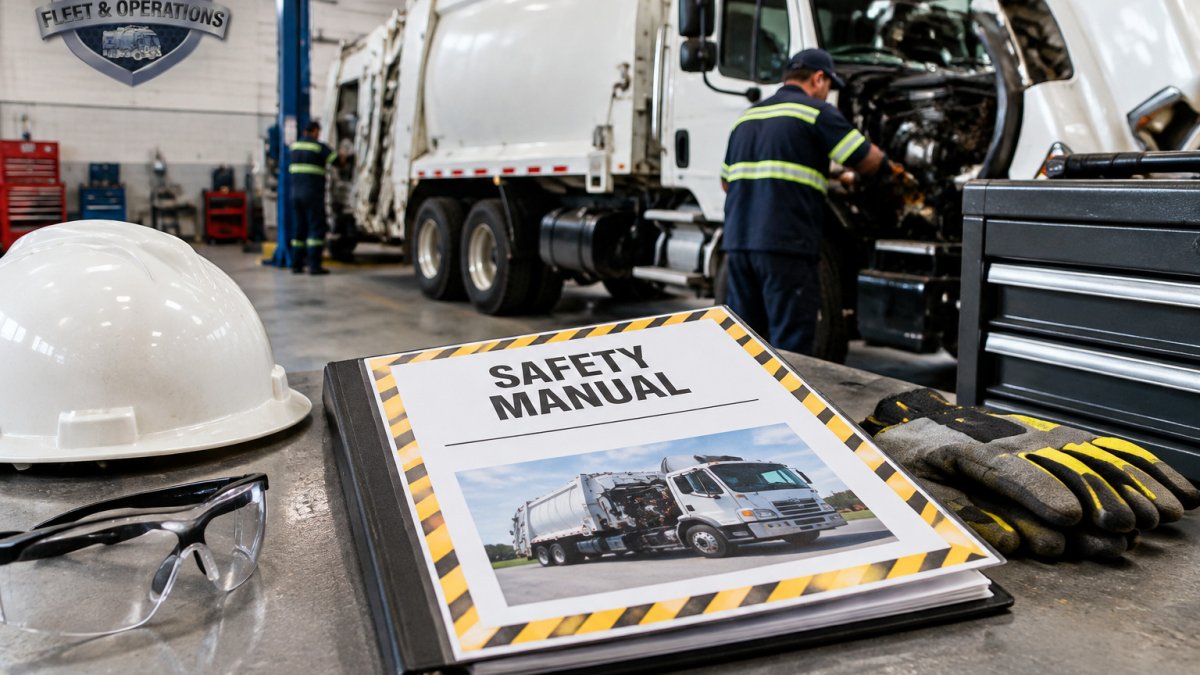
Refuse truck maintenance carries real hazards: hydraulic systems that retain pressure, packers and lift arms that can move unexpectedly, engines that can start, and stored energy in springs and air tanks.
Train every technician on these procedures and document the training. Review the lockout/tagout program at least annually and after any incident.
Maintaining a sanitation fleet is ultimately about predictability: knowing which trucks need attention, catching problems while they are small, and keeping crews on their routes.
Last Updated: November 2, 2026
Frequently Asked Questions
What preventive maintenance should be performed on a sanitation truck?
Preventive maintenance on a sanitation truck covers fluid levels and condition, engine oil and cooling system checks, air filter inspection, tire pressure and wear, brake and air brake inspections, grease fittings, and hydraulic hose and fluid checks. Packer and lifting mechanisms need inspection on the same schedule as the hydraulic system because they carry the heaviest daily loads. Document each check so technicians can spot trends before a component fails on route.
How often should a garbage truck be serviced?
Service intervals depend on operating hours, route severity, and body type rather than a single mileage number. Trucks running hilly, stop-heavy, or rough-surface routes need shorter intervals than trucks on flat, lightly loaded routes. Most fleets set a daily pre-trip inspection, a weekly fluid and tire check, and a periodic full service tied to hours on the engine and hydraulic pump.
What should be included in a refuse truck maintenance checklist?
A refuse truck maintenance checklist should include engine oil and coolant levels, radiator and oil cooler condition, air filter restriction, fuel system leaks, hydraulic fluid level and hose condition, packer blade and ejector wear, tire pressure and tread wear, brake and air brake function, warning lights, brake lights, turn signals, warning beacons, and grease fittings. Add a sign-off line for the technician and the date of each inspection.
How do you reduce breakdowns in a waste collection fleet?
Reduce breakdowns by tying service to actual duty cycles, recording every defect found on route, and fixing recurring issues at the root cause rather than repeatedly replacing parts. Train shop technicians on the specific body and hydraulic systems they service, and review breakdown data monthly so repeat failures are visible.
What is the difference between preventive and predictive maintenance for trucks?
Preventive maintenance follows fixed intervals such as time, hours, or inspection checklists to replace or service parts before they usually fail. Predictive maintenance uses sensor data, fluid analysis, or inspection trends to forecast when a component will fail and schedules work at that point. Preventive programs are the practical starting point for most sanitation fleets, and predictive methods add value once inspection records are consistent.
How should fleets track sanitation truck maintenance?
Track each truck's service history, inspection results, defect reports, parts used, and repair costs in one system. Useful fleet maintenance KPIs include unplanned downtime, road calls per 1,000 miles, repeat repairs on the same component, and maintenance cost per truck. Review these numbers monthly with shop and operations leaders so the schedule can be adjusted based on what the records show.