 blog
Waste Management Fleet Acquisition Consulting: 2026 Guide
Last Updated: October 23, 2026
Quick Summary
Fleet acquisition consulting is advisory work between your capital budget and the dealer's invoice, covering specification review, bid management, lifecycle cost modeling, and operational groundwork. It treats a truck purchase as a lifecycle decision, not a shopping trip, so the cheapest bid rarely wins over eight years.
- Due diligence confirms the unit's spec matches your actual route duty cycle before any commitment.
- Every refuse truck TCO model needs five lines, including downtime and residual value.
- Run a maintenance audit before you buy to confirm your shop can support new equipment.
- Score consultants on weighted criteria, with waste industry experience weighted at 25%.
- Agree on the ROI measurement method before work starts, not after.
Table of Contents
- Why Waste Fleets Need Specialized Acquisition Consulting
- What Fleet Acquisition Consulting Covers: Services Compared
- The Fleet Acquisition Due Diligence Checklist
- Total Cost of Ownership: The Numbers That Decide the Deal
- Running a Waste Fleet Maintenance Audit Before You Commit
- Fleet Replacement Planning and Alternative-Fuel Procurement
- Inside a Waste Fleet Operational Audit
- How to Choose a Consultant: Scorecard and Engagement Models
- Frequently Asked Questions
Why Waste Fleets Need Specialized Acquisition Consulting
A refuse truck is not a delivery van with a bigger box. This is why waste management fleet acquisition consulting exists as its own discipline, and why at Waste Fleet & Operations we treat a truck purchase as a lifecycle decision rather than a shopping trip.
Buy the wrong spec and you inherit years of premature failures; buy the right one without a maintenance plan and the savings evaporate anyway.
Below, we break down what fleet acquisition consulting actually covers, how to run due diligence, and how to score a consultant before you sign anything.
What Fleet Acquisition Consulting Covers: Services Compared
Fleet acquisition consulting is advisory work that sits between your capital budget and the dealer's invoice. It covers specification review, bid management, lifecycle cost modeling, and the operational groundwork that determines whether new iron actually performs. Most buyers assume the job ends at delivery, it doesn't. Here is how the main service lines compare:
| Service Line | What It Delivers | Best For | Typical Trigger |
|---|---|---|---|
| Pre-purchase due diligence | Spec review, condition assessment, records audit | Buyers of used units or an entire fleet | Acquiring an existing operation |
| Procurement strategy | Bid structure, vendor negotiations, contract terms | Fleets replacing 5+ units | Annual capital cycle |
| Maintenance audit | Shop assessment, PM program review, technician skills check | Fleets with rising road calls | Breakdown spike |
| Operational audit | Route, use, and staffing review | Fleets with flat margins | Efficiency push |
| Replacement planning | Lifecycle model and retirement schedule | Any fleet past 6 years | Budget season |
Buyers often hire for the wrong thing: a procurement specialist will get you a better price on a truck that was never right for your routes.
Due Diligence and Pre-Purchase Review
Due diligence answers one question: what are you actually buying? For a single used unit, that means a mechanical inspection by someone who knows refuse bodies, not just chassis. For an acquired fleet, it means pulling maintenance records, checking remaining component life, and flagging units past their economic replacement point. Service records tell you more about a truck than a walkaround ever will.
Procurement Strategy and Vendor Negotiations
Procurement strategy sets the rules before bids arrive: the spec, evaluation criteria, delivery schedule, and warranty terms, so vendors compete on substance instead of on which salesperson returns calls fastest. Negotiations hinge on things buyers forget to ask about, parts availability commitments, service response times, and technician training at delivery.
The Fleet Acquisition Due Diligence Checklist
Use this fleet acquisition due diligence checklist before any commitment, whether you are buying one truck or twenty. It is deliberately short. Long checklists get skimmed.
- Confirm the unit's spec matches your actual route duty cycle
- Pull complete service and repair records, and check for gaps
- Inspect body, packer, and hydraulic components, not just the chassis
The last item is where most deals get decided, and it is also where buyers cut corners.
Total Cost of Ownership: The Numbers That Decide the Deal
Total cost of ownership is the sum of acquisition cost, fuel, maintenance, downtime, and resale value across the years you keep the unit. Purchase price is usually the smallest variable for a refuse truck: two fleets buy comparable trucks at different prices, and the fleet that paid more ends up spending less, the difference is almost always downtime and parts.
The Five Lines Every Refuse Truck TCO Model Needs
- Acquisition cost - purchase price, upfitting, delivery and prep charges, and financing charges over the term. Include the body and arm package, not just the chassis invoice.
- Fuel and route consumables - fuel, diesel exhaust fluid, tires, and route-driven wear items. Model these per mile or per route stop, not per year, so units on different routes compare fairly.
- Maintenance and repair - preventive maintenance at your actual intervals plus an unplanned repair reserve. Use your own shop history by component, not a generic industry average.
- Downtime - the cost of a truck that cannot run its route, including backup coverage, overtime, and rented replacement. Assign a dollar-per-day figure to a down unit and multiply by expected shop days per year.
- Residual value - what the unit is worth at your planned retirement point, net of disposal or auction costs. Resale value is where body condition and service records pay you back.
How to Compare Two Bids on Lifecycle Cost
Build the model in a spreadsheet with one column per candidate unit and one row per line item above. Convert everything to a cost per mile or cost per route day so units with different utilization compare honestly, then run three scenarios: expected duty cycle, heavier-than-expected duty cycle, and a shorter hold period. The bid that wins in only one scenario is a bet, not a decision.
Where the Model Usually Gets It Wrong
Three errors show up again and again: using a generic maintenance cost per mile instead of your own shop data, which hides the problem units; ignoring downtime because it never appears on an invoice, even though it is often the largest variable line for a route truck; and assuming a resale value without checking what comparable units with similar hours and body condition bring at auction. A consultant earns their fee here by building the model with your numbers and pressure-testing the assumptions, not by handing you a template.
Running a Waste Fleet Maintenance Audit Before You Commit
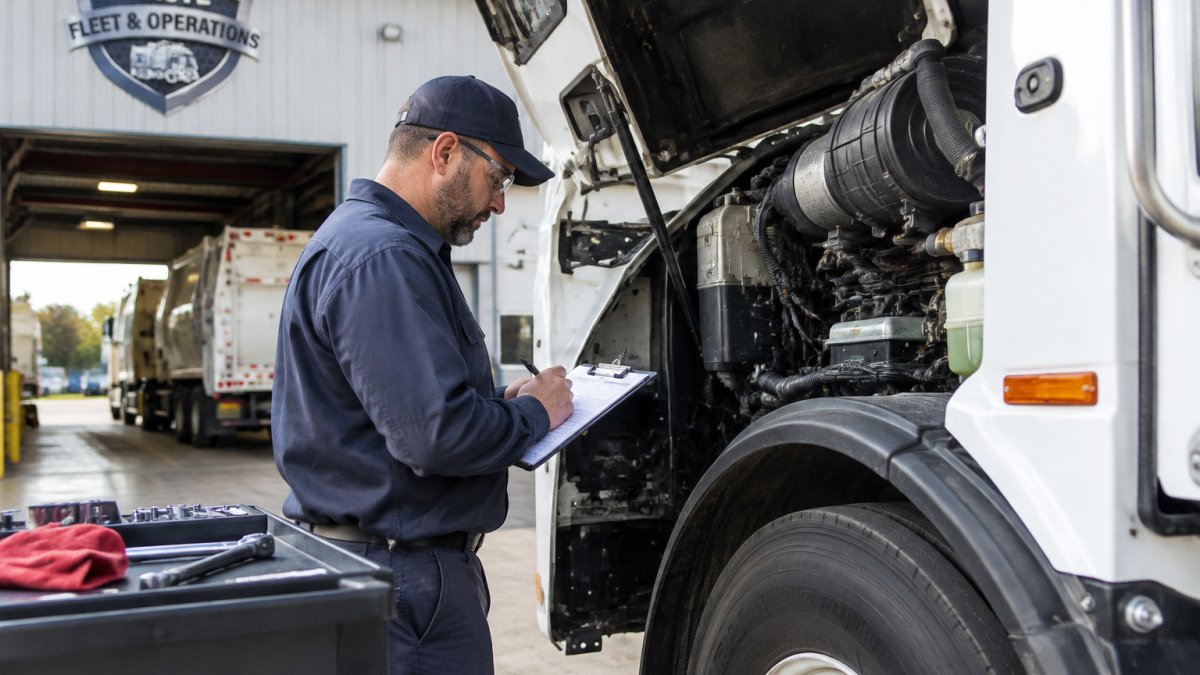
A waste fleet maintenance audit is a structured review of your shop's preventive maintenance program, technician skills, parts management, and record keeping. Run it before you buy, not after, because it tells you whether your operation can support the new equipment.
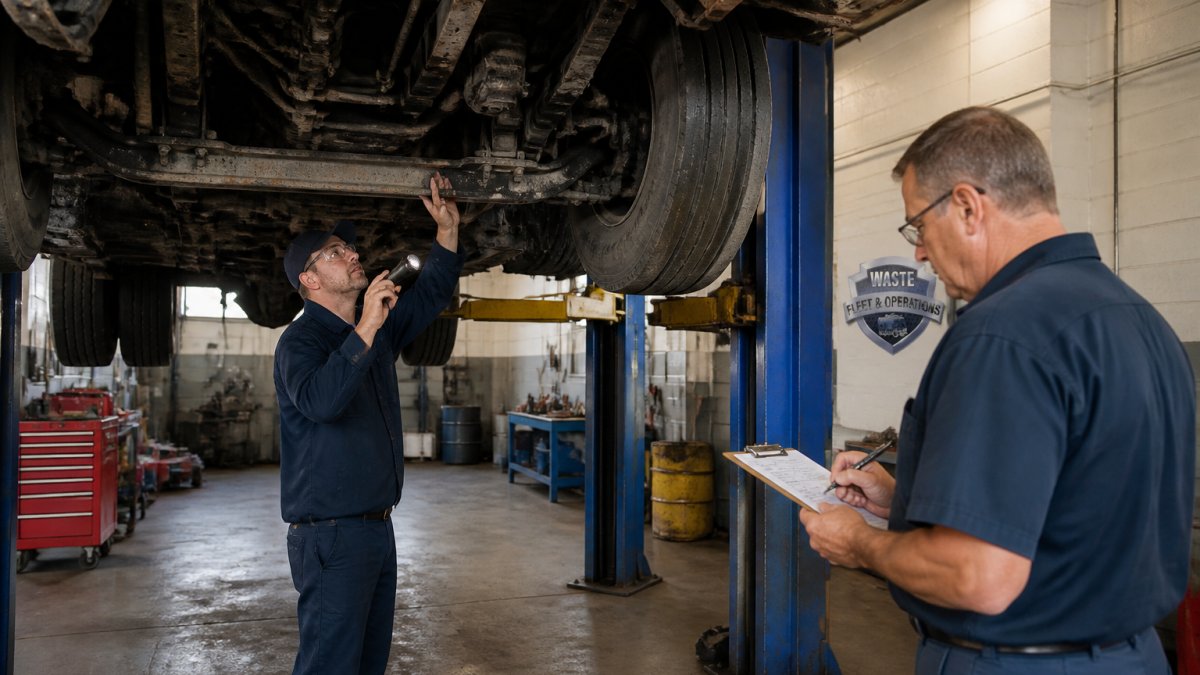
Look at three things first:
- PM compliance - are services actually being performed on interval, or deferred?
- Repeat repairs - the same component failing on the same unit points to root cause, not bad luck
- Parts management - stockouts on high-failure components stretch every repair into a multi-day event
A common mistake is treating the audit as a report card for the shop. It is not. It is a capacity check for your capital plan.
Book My Complimentary Discovery Call →
Fleet Replacement Planning and Alternative-Fuel Procurement
Fleet replacement planning is the discipline of retiring units at the point where cost per mile starts climbing faster than the cost of a new unit. Get it right and you avoid the two expensive failure modes: running trucks into the ground, and replacing them years too early.
Alternative-fuel procurement adds a layer. Electric and low-emission units change the calculus on fuel and maintenance, but they also change infrastructure requirements, route assignment, and technician training. Before committing, confirm:
- Route length and duty cycle fit the unit's real range under load
- Charging or fueling infrastructure is in place or budgeted
- Your technicians can service the new technology, or training is planned
Federal and state incentive programs change frequently. Verify current terms directly with the administering agency before you build them into a business case.
Inside a Waste Fleet Operational Audit
A waste fleet operational audit examines how the fleet is used rather than how it is maintained, covering route structure, vehicle use, staffing, and information flow between the shop floor and management.
A regional hauler's VP of Operations described the result this way: "We have been able to reduce the number of daily breakdowns we were having by 25% to sometimes 50%."
How to Choose a Consultant: Scorecard and Engagement Models
Choose a consultant on evidence of waste-specific experience, a defined measurement plan, and an engagement model that fits your budget. Generalist management consulting firms rarely carry the shop-floor knowledge this work requires.
Score candidates against weighted criteria rather than gut feel:
| Criterion | Weight | What Good Looks Like |
|---|---|---|
| Waste industry experience | 25% | Handles refuse bodies, not just chassis |
| Hands-on capability | 20% | Works with your technicians on your equipment |
| Measurement plan | 20% | Defines success metrics before work starts |
| Scope fit | 15% | Matches your fleet size and budget |
| Communication approach | 10% | Connects shop floor and management |
| References | 10% | Verifiable results from comparable fleets |
Engagement Models and How Fees Are Usually Structured
Advisory work in this sector comes in three shapes, and the shape should follow the problem, not the consultant's preference.
- Fixed-scope project - a defined deliverable such as a specification package, a bid evaluation, or a maintenance audit, priced as a flat fee. Best when you know exactly what you need and want cost certainty.
- Retainer - ongoing advisory across a capital cycle, priced monthly or quarterly. Best when you are replacing units over several budget years and want continuity.
- Phased program - a sequence of projects with checkpoints, priced per phase. Best when the scope is large enough that you want to stop or redirect after each phase.
Fees depend on fleet size, scope, and duration, so ask for a scoped proposal rather than a rate card. It should state the deliverable, timeline, assumptions, and what is explicitly out of scope, if a consultant cannot put those in writing, the engagement will drift.
How to Measure Return on Investment
Agree on the measurement method before work starts, because savings here are easy to claim and hard to prove after the fact. Practical measures include:
- Acquisition savings - the difference between the winning bid and the next-best compliant bid, or versus your prior-year price on a comparable unit.
- Spec-driven cost avoidance - modeled maintenance and downtime savings from correcting a spec before order rather than after delivery.
- Downtime reduction - road calls and shop days per unit before and after the engagement.
A consultant who cannot define how success will be measured before starting is telling you something. The same goes for one who will not separate their fee from the savings they claim to generate.
Questions to Ask Before You Sign
Ask each finalist for two references from fleets of similar size and equipment mix, and ask those references what changed in measurable terms. Ask how the consultant handles a disagreement between the shop and management over a spec. Ask who actually does the work, since the person in the sales meeting is not always the person in your shop. Smaller operations ask whether this work is built for them.
Frequently Asked Questions
When should a waste hauler hire a fleet acquisition consultant?
Bring one in before you sign a purchase order or letter of intent, not after. The best window is during due diligence, when a consultant can inspect collection equipment, pull maintenance and repair records, and model lifecycle costs against your route profile. For acquisitions of an existing hauler, the review should start as soon as the data room opens. For straight equipment purchases, a consultant earns their fee by catching spec mismatches, hidden downtime exposure, and vendor terms that inflate total cost of ownership over the truck's service life.
What should buyers inspect during waste fleet due diligence?
Start with the physical fleet: hours and miles on each unit, body and compactor condition, hydraulic leaks, and rust on the packer. Then pull records for preventive maintenance, road calls, parts spend, and warranty claims. Check title and lien status, remaining warranty coverage, and whether the fleet's spec matches the routes it actually runs. A fleet acquisition due diligence checklist should also cover driver and technician staffing, shop capacity, and any deferred repairs that will land on your balance sheet in year one.
How do fleet maintenance costs affect an acquisition decision?
Maintenance and repair costs are the most common place buyers get surprised. A fleet that looks cheap on paper can carry deferred repairs, out-of-warranty components, and a preventive maintenance program that has slipped. Model maintenance costs per unit per year, not as a lump sum, and compare them to benchmark ranges for similar collection equipment. If a waste fleet maintenance audit shows breakdown rates climbing, factor in the cost of downtime, road calls, and replacement vehicles before you agree on a price.
What is included in a waste fleet operational audit?
A waste fleet operational audit looks at how the fleet actually runs, not just what it costs. It typically covers route utilization, vehicle uptime, shop throughput, technician productivity, parts management, and the communication flow between the shop floor and management. The output should be a prioritized list of fixes with expected impact on breakdowns and operating costs. Ask any provider how they measure success and what ongoing progress measurement looks like, because a one-time report without follow-up rarely changes daily operations.
The hard part is not finding a consultant. It is committing capital to trucks while your shop is already stretched thin, and knowing the purchase will not fix what is broken underneath it. Waste Fleet & Operations builds engagements around your operation rather than a template, with hands-on training on your own trucks, root cause analysis, and progress measurement from day one. Book a complimentary discovery call and we will map your acquisition plan against your maintenance reality.