 blog
7 Waste Operations Consulting Moves PE Firms Get Wrong
Last Updated: October 30, 2026
Quick Summary
Waste operations consulting for private equity is a specialized discipline covering fleet maintenance, route economics, labor relations and environmental compliance, not general management consulting. Firms that treat fleet diligence as a paperwork exercise often lose value in the first hundred days after close.
- Deferred fleet capex is one of the easiest costs to hide in a waste business.
- A waste fleet maintenance assessment belongs before signing, not after.
- The four-workstream framework covers commercial, operational, environmental and regulatory diligence.
- Each workstream should produce a dollar range, not a narrative.
- The test of a consultant is whether the sponsor can rerun the playbook on the next deal.
Table of Contents
- Why Waste Operations Consulting for Private Equity Is Different
- Mistake 1: Treating Waste Fleet Due Diligence as a Paperwork Exercise
- Mistake 2: Skipping Waste Management Operational Due Diligence on the Shop Floor
- Mistake 3: Commissioning a Waste Fleet Maintenance Assessment Too Late
- Mistake 4: Confusing Waste Company Operational Improvement With Headcount Cuts
- Mistake 5: Hiring Consultants Who Have Never Wrenched on a Truck
- Mistake 6: Measuring Success With Financials Only
- Book a Complimentary Discovery Call Before Your Next Deal
- Frequently Asked Questions
Why Waste Operations Consulting for Private Equity Is Different
Waste operations consulting for private equity is not general management consulting with a garbage truck photo on the cover. It is a specialized discipline that sits at the intersection of fleet maintenance, route economics, labor relations, and environmental compliance. The firms that get this wrong often lose value in the first hundred days after close.
The difference comes down to assets. A software portfolio company's biggest risk is churn. A waste hauler's biggest risk is a refuse truck sitting dead in the yard while a route goes uncovered. Fleet uptime is the revenue engine, and most deal teams never look under the hood until it is too late.
Below, we walk through the moves PE firms most often get wrong, and what to do instead.
Mistake 1: Treating Waste Fleet Due Diligence as a Paperwork Exercise
Waste fleet due diligence is an inspection discipline, not a document review. Deal teams often accept a maintenance log export, a spreadsheet of repair invoices, and a verbal assurance from management that the fleet is "well maintained." That is not diligence. That is transcription.
The real questions are physical. What is the average age of the power units? Are there trucks running past their planned replacement cycle because capex was deferred to dress up EBITDA? Do the shop's preventive maintenance intervals match what the OEM specifies, or have they been stretched to save labor hours?
A common mistake is trusting the maintenance software's dashboard without confirming the data behind it. If work orders are closed without the work being completed, the dashboard can look clean while the trucks are still failing.
Watch out: deferred fleet capex is one of the easiest costs to hide in a waste business, and it surfaces as a wave of breakdowns three to six months after close. Before your next deal, work through our waste fleet due diligence checklist so the physical inspection matches the financial one.
Mistake 2: Skipping Waste Management Operational Due Diligence on the Shop Floor
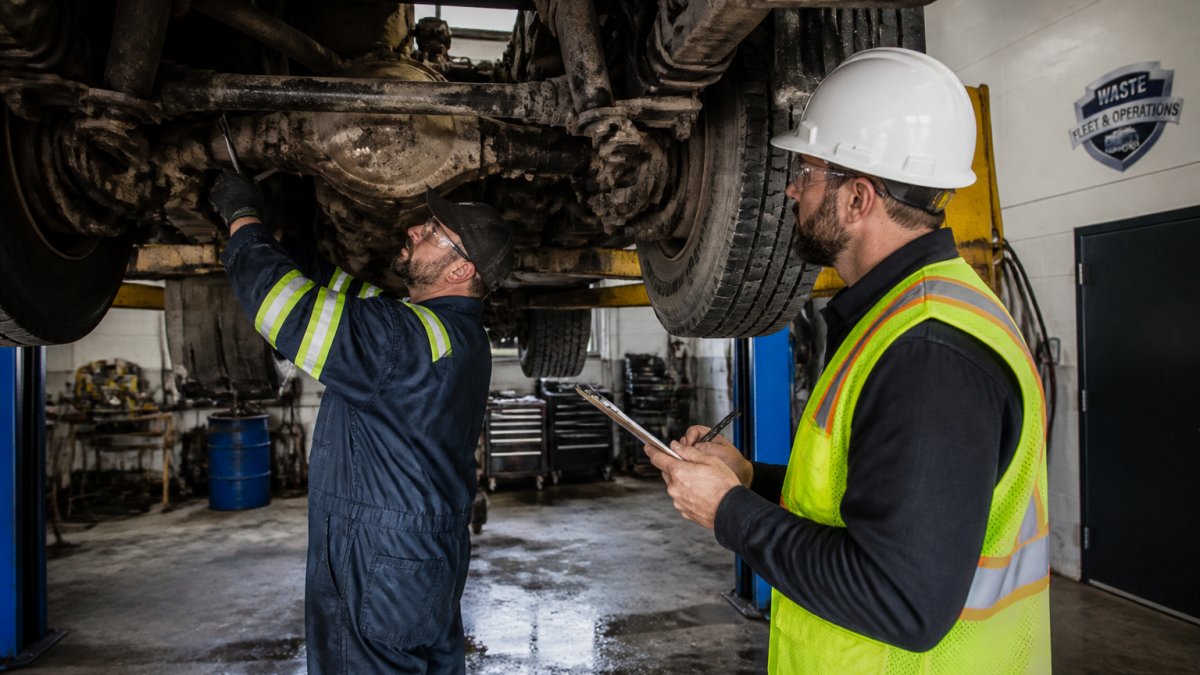
Waste management operational due diligence fails when it stays in the conference room. The shop floor tells you things the data room never will: whether techs have the tools to do the job, whether parts are stocked or every repair waits on a vendor, and whether the maintenance manager has authority or just a title.
Walk the bay. Count the trucks waiting on parts. Use our Waste Hauling Operational Audit Checklist to structure what you observe on the shop floor. Ask a technician how a road call gets dispatched and watch whether the answer matches what management told you.
What most guides miss is the communication gap. In many haulers, the shop and the front office barely speak, so breakdown patterns never reach the people setting capex.
Mistake 3: Commissioning a Waste Fleet Maintenance Assessment Too Late
A waste fleet maintenance assessment belongs before signing, not after. By that point the deferred repairs are yours and the negotiating leverage is gone.
But timing is only half the problem. The bigger miss is scope. A fleet-only review answers "what will break," not "what is this business worth." PE buyers need a waste operations diligence framework that runs four workstreams in parallel and reconciles them into one number.
The four-workstream diligence framework
1. Commercial diligence. Route density by service line, customer concentration, contract terms and escalators, roll-off and commercial container mix, and pricing power in each submarket. The question is whether revenue is defensible when a top-10 customer leaves or a municipal contract reprices.
2. Operational diligence. Fleet age and replacement cycle, shop capacity and technician headcount, PM compliance, parts inventory, dispatch and route sequencing, transfer station throughput, and landfill or disposal dependency. This is where deferred capex hides.
3. Environmental diligence. Permit status and conditions, landfill and transfer station air and stormwater permits, leachate handling, closed-cell obligations, and any consent orders or notices of violation. Environmental liabilities in waste are long-tailed and easy to underprice.
4. Regulatory diligence. State and local franchise agreements, certificate-of-need or hauling authority requirements, weight and emissions rules affecting fleet replacement, and OSHA exposure in the shop and on the route.
What to request and what to flag
A practical data request list includes: three years of repair and maintenance invoices, fleet asset register with VINs and in-service dates, PM schedules versus completed work orders, capex budgets versus actual spend, permit register with expiration dates, and any regulatory correspondence. Most practitioners find the red flags cluster in three places: capex that ran below depreciation for two or more years, PM intervals stretched beyond OEM specification, and permits with conditions the operator cannot document compliance against.
Turning findings into a purchase price adjustment
Each workstream should produce a dollar range, not a narrative. Deferred fleet capex becomes a closing adjustment or an escrow. Permit remediation becomes a holdback. Route density gaps become a synergy or dis-synergy line in the model. When the four workstreams reconcile, the deal team has a defensible number instead of a slide.
Book My Complimentary Discovery Call →
If you are already past signing, do not wait for the first bad quarter.
Mistake 4: Confusing Waste Company Operational Improvement With Headcount Cuts
Waste company operational improvement is not a euphemism for layoffs. Value in a waste business often comes from uptime as much as from payroll. Cut the shop and you cut the people who keep trucks on the road, and the savings evaporate into road calls and lost routes.
Real improvement levers look different:
- Preventive maintenance schedules built around actual duty cycles
- Parts inventory discipline so trucks are not idle waiting on a delivery
- Technician training that reduces repeat failures
- Root cause analysis on every major breakdown
- Clear escalation paths between drivers, dispatch, and the shop
Each of these raises the productivity of the people you already have. That is the point.
Mistake 5: Hiring Consultants Who Have Never Wrenched on a Truck
Waste operations consulting only works when the advisor has stood in the bay. A generalist consulting firm can build a beautiful slide deck about fleet strategy and still not know why a refuse body is cracking at the hopper.
Ask three questions before you sign an engagement:
- Has the lead consultant turned wrenches on heavy diesel equipment, or only managed people who did?
- Can they explain a specific failure mode they have diagnosed on a refuse truck?
- Do they train your techs hands-on with your trucks, or deliver classroom theory?
If the answers are vague, keep looking.
Mistake 6: Measuring Success With Financials Only
Financials lag. By the time maintenance cost per truck shows up on the P&L, the fleet problem is already months old. Track operational leading indicators alongside the money.
| Metric | What It Tells You | Why It Matters |
|---|---|---|
| Daily breakdowns | Fleet health in real time | Predicts route failures |
| Road calls per week | Dispatch strain | Drives overtime and lost service |
| PM compliance rate | Shop discipline | Prevents avoidable failures |
| Mean time to repair | Parts and staffing gaps | Keeps trucks earning |
| Repeat failure rate | Training and diagnosis quality | Reveals root cause gaps |
One private regional hauler reported that it was able to reduce its daily breakdowns by 25% to sometimes 50%. To build a fuller success picture, use our step-by-step guide to calculating ROI for waste fleet consulting.
From diligence findings to a 100-day plan
The mistake most PE firms make is treating the diligence report as a closing document. It should be the first draft of the 100-day plan. Map every finding to an owner, a metric, and a date:
- Days 0-30: Stabilize. Confirm fleet asset register, lock PM schedules to OEM intervals, stand up a weekly breakdown and road-call report, and verify permit compliance documentation.
- Days 31-60: Fix the leaks. Rebuild parts inventory minimums, establish root cause analysis on every major failure, and set a capex cadence tied to duty cycle rather than calendar year.
- Days 61-100: Institutionalize. Publish the leading-indicator dashboard to the board, tie technician training to repeat-failure data, and document the operating standard so it can travel to the next acquisition.
Scaling across the portfolio
The real return for a PE sponsor comes from repetition. Once the 100-day playbook works at one hauler, codify it: a standard fleet diligence checklist, a standard PM audit, a standard KPI dashboard, and a standard capex review cadence. Each add-on then starts from the playbook instead of a blank page, which shortens the next 100 days and makes the value-creation case to lenders more credible.
Track the leading indicators from day one, and the financials will follow, at the portfolio level, not just the company level.
Book a Complimentary Discovery Call Before Your Next Deal
The pattern across all seven mistakes is the same: value leaks out because nobody looked closely enough, early enough. Waste operations consulting for private equity works best when it starts before the letter of intent and continues through post-close execution.
Waste Fleet & Operations builds engagements around your operation, not a template. We train your techs hands-on with your trucks, led by Master Diesel Technicians with 40 years of industry experience, and we include root cause analysis and ongoing progress measurement.
Before your next deal, get started with Waste Fleet & Operations and put a real fleet number into your model.
Frequently Asked Questions
What does a waste operations consulting firm actually do for a private equity firm?
A waste operations consulting firm gives PE investors an independent read on the physical side of a target or portfolio company: fleet condition, maintenance practices, shop leadership, and route reliability. That means reviewing repair records, inspecting trucks, interviewing technicians and managers, and benchmarking breakdown rates and cost per mile. The output is a written assessment of operational risk and value-creation levers, delivered so investment committees can price risk more accurately instead of relying only on seller-reported numbers.
How can private equity firms assess a waste company's fleet before an acquisition?
Start with a waste fleet maintenance assessment that goes beyond the seller's maintenance logs. Pull 12 to 24 months of repair orders and road call records, then sample physical trucks across age and body type. Look for deferred preventive maintenance, repeat failures on the same unit, parts inventory gaps, and technician turnover. Compare breakdown frequency and cost per mile against similar haulers. A hands-on assessment surfaces issues a financial model may miss, such as a fleet aged past its useful life with no capex plan to replace it.
What operational metrics should investors review in a waste business?
Track breakdowns per day, road calls per 100 trucks, maintenance cost per mile, preventive maintenance compliance rate, technician turnover, and parts inventory accuracy. On the collection side, review stops per hour, route completion rate, and missed pickups. These metrics show whether the fleet is reliable enough to hit revenue targets and whether maintenance spend is controlled or reactive. Pair them with safety and compliance indicators. Low preventive maintenance completion rates can lead to higher breakdowns and unplanned capex.
When should a private equity firm bring in a waste industry consultant?
Bringing in a consultant during confirmatory diligence can let you adjust price or negotiate representations and warranties around fleet condition and maintenance risk. That timing lets you adjust price or negotiate representations and warranties around fleet condition and maintenance risk. For existing portfolio companies, the first 90 days post-close is the window to establish baselines and start waste company operational improvement work before bad habits harden. Waiting until breakdowns spike or a safety incident occurs usually costs more, because you are fixing problems under pressure rather than planning fixes on your own schedule.