 blog
7 Ways to Reduce Fuel Costs in Waste Operations
Last Updated: October 28, 2026
Quick Summary
You reduce fuel costs in waste operations by measuring fuel cost per ton and idle hours first, then applying route optimization, idle-reduction rules, preventive maintenance, telematics reviews, right-sized collection frequency, and load consolidation. Start with low-effort, high-impact items like idle rules and a weekly telematics review before moving to routing and right-sizing.
- Track fuel cost per ton collected and idle hours per truck per day as your core baseline KPIs.
- Pull two weeks of GPS history to find crossing paths, backtracking, and deadheading before buying route software.
- Enforce auto-idle shutdown, no-idle zones at the yard and transfer station, and driver idle scorecards.
- Check tire pressure every pre-trip and replace air and fuel filters on schedule to protect MPG.
- Measure container fill rates on pickup day and move half-empty stops to a longer cycle or larger container.
Table of Contents
- Why Fuel Costs Drain Waste Operations Budgets
- Measure First: Baseline KPIs for Fuel Waste
- 1. Waste Collection Route Optimization That Cuts Fuel per Mile
- 2. Reduce Truck Idling With Simple Fleet Rules
- 3. Preventive Maintenance for Waste Trucks That Protects Fuel Efficiency
- 4. Waste Fleet Telematics: What Data Actually Moves the Needle
- 5. Right-Size Collection Frequency and Container Capacity
- 6. Consolidate Suppliers and Loads to Cut Empty Miles
- What Matters Most for Cutting Fuel Costs
- Frequently Asked Questions
Why Fuel Costs Drain Waste Operations Budgets
Fuel is the single largest controllable cost in most waste hauling businesses. Every mile a truck runs, every minute it idles, and every extra stop on a route burns diesel you have already paid for.
The problem is not just the price at the pump. It is how much fuel your fleet wastes before it ever does useful work.
Many operations managers treat fuel as a fixed cost. It is not. For a broader look at managing these pressures, see our municipal fleet efficiency guide. The U.S. Department of Energy's vehicle efficiency resources outline how much idling and poor maintenance cost fleets each year.
Below, we break down seven ways to reduce fuel costs in waste operations, starting with measurement, because you cannot cut what you have not counted.
Municipal fleet efficiency guide
Measure First: Baseline KPIs for Fuel Waste
You cannot manage fuel costs without a baseline.
The most useful single metric for waste operations is fuel cost per ton collected. It ties fuel directly to the work performed, so it rises when routes get sloppy and falls when they tighten up.
Pair it with these baselines, each calculated the same way every time:
- Miles per gallon (MPG), total miles driven divided by gallons pumped, tracked by truck and by route type (residential, commercial, roll-off, transfer).
- Idle hours per truck per day, pull from telematics or engine-hour meters; report as a daily average and a monthly total.
- Fuel per mile, gallons consumed divided by miles driven; compare collection routes against transfer and disposal runs, which should look very different.
- Stops per gallon, stops completed divided by gallons burned on residential routes; this exposes route density problems that MPG alone hides.
- Cost per ton including tipping fees and fuel, total disposal cost plus fuel cost divided by tons; this is the number your CFO actually cares about.
- Fuel cost as a percentage of revenue, total fuel spend divided by route revenue; a rising percentage means fuel is outpacing the work you are billing for.
Track these for at least 30 days before making changes. A common mistake is jumping straight to route software or new equipment before anyone knows where the fuel is actually going.
Set a review cadence. A weekly 15-minute review of idle hours and MPG by route, plus a monthly review of fuel cost per ton, is enough to catch drift before it becomes a budget problem.
Energy Information Administration diesel price data
DOE fleet fuel economy and idling resources
1. Waste Collection Route Optimization That Cuts Fuel per Mile
Route optimization is the biggest lever most haulers have. A tighter route means fewer miles, less idling in traffic, and fewer hours on the road burning fuel. But "optimize your routes" is not a plan, here is how to actually do it.
Start with the data you already have. Pull two weeks of GPS history and look for the obvious waste: trucks crossing paths, backtracking on dead-end streets, running residential loops during peak traffic, and deadheading long distances to disposal sites. Re-sequencing stops by density and street direction often trims miles without any software at all. Many haulers find that simply moving the heaviest residential stops earlier in the day, before traffic builds, cuts idle time and fuel burn on the same route.
Build a route data set before you buy a tool. Route optimization software is only as good as the inputs. Gather:
- Stop locations and service frequencies by customer and container type
- Container sizes and expected fill rates
- Service windows and customer constraints (schools, hospitals, commercial docks)
- Truck capacities by type (rear loader, front loader, roll-off)
- Disposal and transfer site locations, hours, and tipping fees
- Driver shift rules and break requirements
- Road restrictions: weight limits, low bridges, narrow streets, turnarounds
Evaluate software on four things: how well it handles your actual service mix (mixed residential and commercial is harder than it looks), whether dispatchers and drivers can override routes in real time, how it reports fuel per mile and stops per gallon after the fact, and what it costs to implement, including data cleanup, training, and the first month of parallel running. Ask vendors for a pilot on one route or one area before committing to a fleet-wide rollout.
Phase changes in by area. Aggressive route changes can break service windows and trigger complaints. Move one neighborhood or one commercial corridor at a time, keep a manual override for drivers, and watch complaint volume and missed pickups for the first two weeks.
Measure the result in fuel, not just miles. Compare fuel per mile and stops per gallon on the changed route against its own baseline for four weeks. A route that saves miles but adds idling at a transfer station may not save fuel at all.
For a deeper walkthrough, see our guide to improving waste truck route efficiency.
2. Reduce Truck Idling With Simple Fleet Rules
Idling burns fuel for zero miles of work. A refuse truck idling between stops, at the scale, or during lunch is a diesel heater running on your budget.
The fix is simple rules, enforced consistently:
Book My Complimentary Discovery Call →
- Auto-idle shutdown after a set number of minutes
- No-idle zones at the yard and transfer station
- Driver scorecards that show idle hours per shift
- Pre-trip checks done with the engine off
Most fleets find idling drops fast once drivers see their own numbers. The key is making idle time visible and tying it to coaching, not punishment. For a full playbook, read our guide on how to reduce waste truck idling costs.
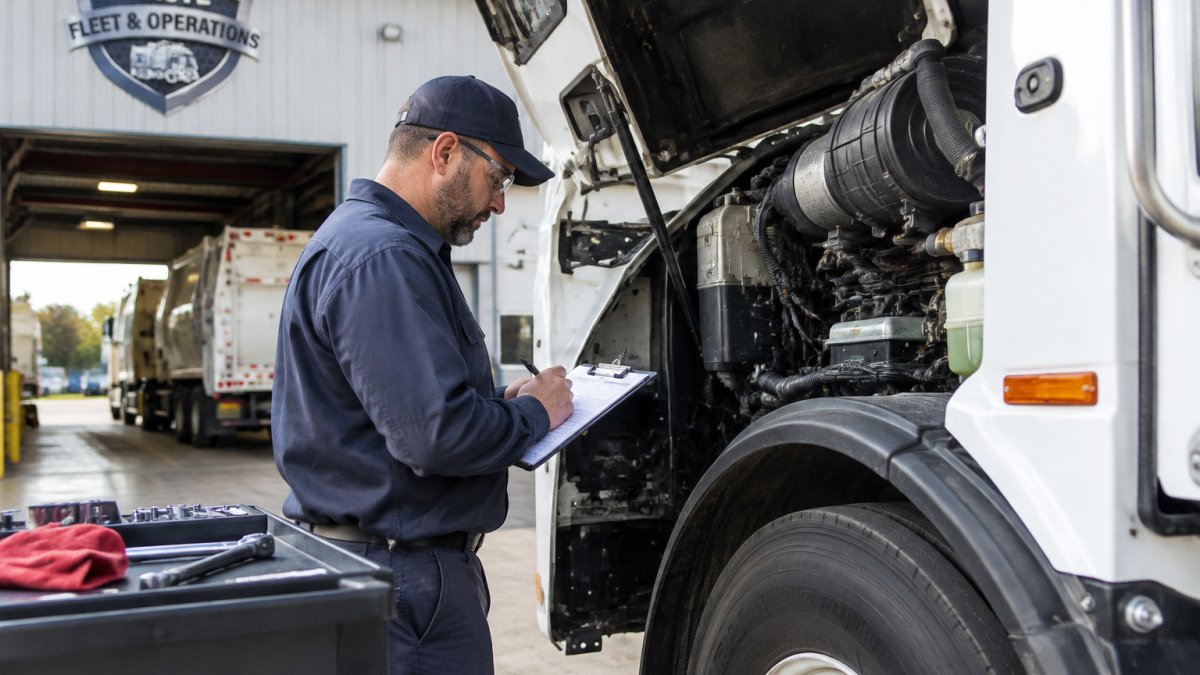
3. Preventive Maintenance for Waste Trucks That Protects Fuel Efficiency
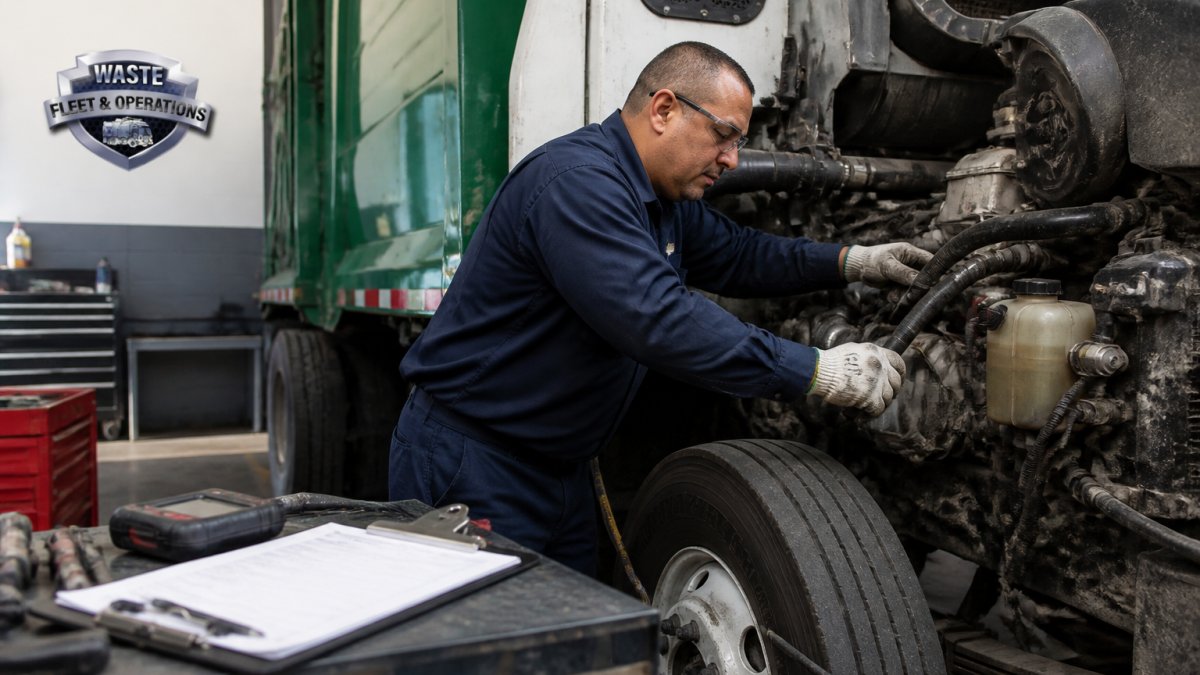
A truck that runs poorly burns more fuel. Low tire pressure, clogged filters, bad injectors, and dragging brakes all quietly steal miles per gallon.
Preventive maintenance is the practice of servicing trucks on a fixed schedule and inspection checklist before failures occur. It protects fuel efficiency because a healthy engine, correct tire pressure, and clean air and fuel systems all reduce the energy needed to move the truck.
Build a checklist around the fuel system:
- Tire pressure checked every pre-trip
- Air and fuel filters replaced on schedule
- Injector and turbo inspections at set intervals
- Brake drag and wheel bearing checks
- Fluid levels and leaks logged every service
The thing nobody tells you about maintenance is that the fuel savings are a side effect. Our waste truck maintenance cost reduction tips cover how to build the schedule.
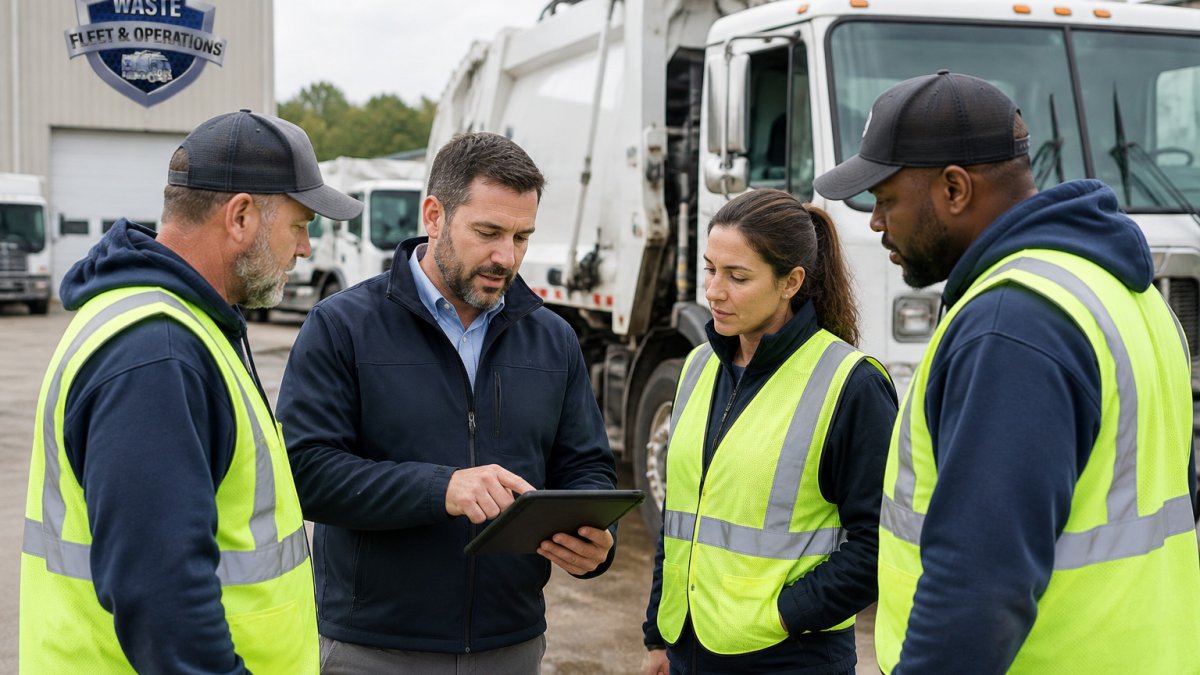
4. Waste Fleet Telematics: What Data Actually Moves the Needle
Telematics gives you the numbers to manage fuel instead of guessing. But most fleets drown in dashboards and change nothing.
Waste fleet telematics is the use of GPS, engine, and sensor data to track how trucks are driven and used. The data that actually moves fuel costs is narrow:
- Idle time by truck and driver
- Harsh acceleration and braking events
- Speeding and RPM bands
- Fuel consumption against route miles
- In-cab fuel monitoring alerts for anomalies
Ignore the rest at first. Set a weekly review of idle hours and MPG by route, coach the outliers, and watch the trend. Data without a review habit is just a subscription.
5. Right-Size Collection Frequency and Container Capacity
Running trucks more often than the waste stream requires is pure fuel waste. Right-sizing means matching collection frequency and container size to actual fill rates.
Start by measuring how full containers are on pickup day. If most are half-empty, you are collecting too often. Move those stops to a longer cycle or a larger container, and cut the trips.
This is where small fleets often win fastest. A 15-truck operation can shift a few routes to a longer cycle and cut miles without new equipment. Our guide to small waste fleet operational improvements walks through the process step by step.
Watch out: cutting frequency too far causes overflow and complaints. Test changes on a sample of stops first.
6. Consolidate Suppliers and Loads to Cut Empty Miles
Empty miles are the quietest fuel drain in waste operations. A truck running back to the yard half-full, or a transfer run that could have waited for a fuller load, burns fuel for nothing.
Two moves help:
- Load consolidation: combine partial loads and time transfer runs so trucks leave full.
- Supplier consolidation: fewer disposal and recycling destinations means shorter, more predictable runs.
Map your disposal and recycling sites against route geography. If trucks are crossing the county to reach a distant facility, a closer disposal alternative or a renegotiated hauler agreement can cut real miles. Grouping recycling and material separation drop-offs on the same corridor compounds the savings.
What Matters Most for Cutting Fuel Costs
The throughline across all seven tactics is measurement. Fuel waste hides in idle hours, half-full trucks, and routes nobody reviewed. Once you count fuel per ton and idle hours, the fixes become obvious.
Here is how the levers compare:
| Lever | Typical Effort | Fuel Impact | Watch Out For |
|---|---|---|---|
| Route optimization | Medium | High | Service window complaints |
| Idling rules | Low | Medium-High | Driver pushback |
| Preventive maintenance | Medium | Medium | Schedule discipline |
| Telematics review | Low-Medium | Medium | Dashboard overload |
| Right-sizing frequency | Medium | High | Overflow complaints |
| Load consolidation | Medium | Medium | Timing conflicts |
Start with the low-effort, high-impact items: idle rules and a weekly telematics review. Then move to routing and right-sizing once you have a baseline.
Fuel costs will keep pressure on every waste operation, and the fleets that win are the ones that measure, coach, and adjust instead of reacting at the pump. At Waste Fleet & Operations, we help haulers build preventive maintenance programs and provide hands-on technician training tailored to each client's operation.
Frequently Asked Questions
How can waste fleets reduce fuel costs without cutting service levels?
Route optimization and right-sizing collection frequency are possible approaches to consider before changing service days. Re-sequencing stops, filling trucks closer to legal payload, and matching container capacity to actual volume are ways to examine potential route changes. Pair that with idling rules and a preventive maintenance schedule. Measure fuel per mile and cost per ton before and after each change.
Which driver habits increase fuel consumption in refuse trucks?
Hard acceleration, excessive idling during pickups, speeding on transfer runs, and skipping pre-trip checks all raise fuel consumption. Refuse trucks are heavy and stop-start by nature, so aggressive throttle use compounds quickly. Telematics can flag idling over a set threshold and harsh acceleration events by driver. Coaching drivers on smooth acceleration, shutting down during long waits, and keeping tires properly inflated are possible practices to consider.
How often should waste collection vehicles receive preventive maintenance?
Follow the manufacturer's intervals and consider duty cycle when reviewing maintenance needs. Track road calls and breakdown trends to inform maintenance planning. Waste Fleet & Operations provides hands-on preventive maintenance training tailored to each client's operation.
What fleet data should waste haulers track to control fuel costs?
Track fuel per mile, gallons per engine hour, idle percentage, cost per ton collected, and road call frequency. Add route completion times and average stops per hour to spot inefficient sequencing. The numbers only help if someone reviews them regularly. Set a baseline for each metric, then compare after route changes, maintenance adjustments, or driver coaching to confirm the savings are real.